Get Full Government Meeting Transcripts, Videos, & Alerts Forever!
Get email alerts on the Animal Control Dog Bite Law topic
No spam. Unsubscribe anytime.
Survivor testimony, prosecutors and dog wardens urge stiffer penalties in ‘Avery’s Law’ hearings
Summary
Lawmakers heard emotional testimony from 12-year-old survivor Avery Russell, family members, county officials and animal-control leaders supporting House Bill 247 — known locally as Avery’s Law — which would raise penalties and give dog wardens more authority after severe unprovoked attacks.
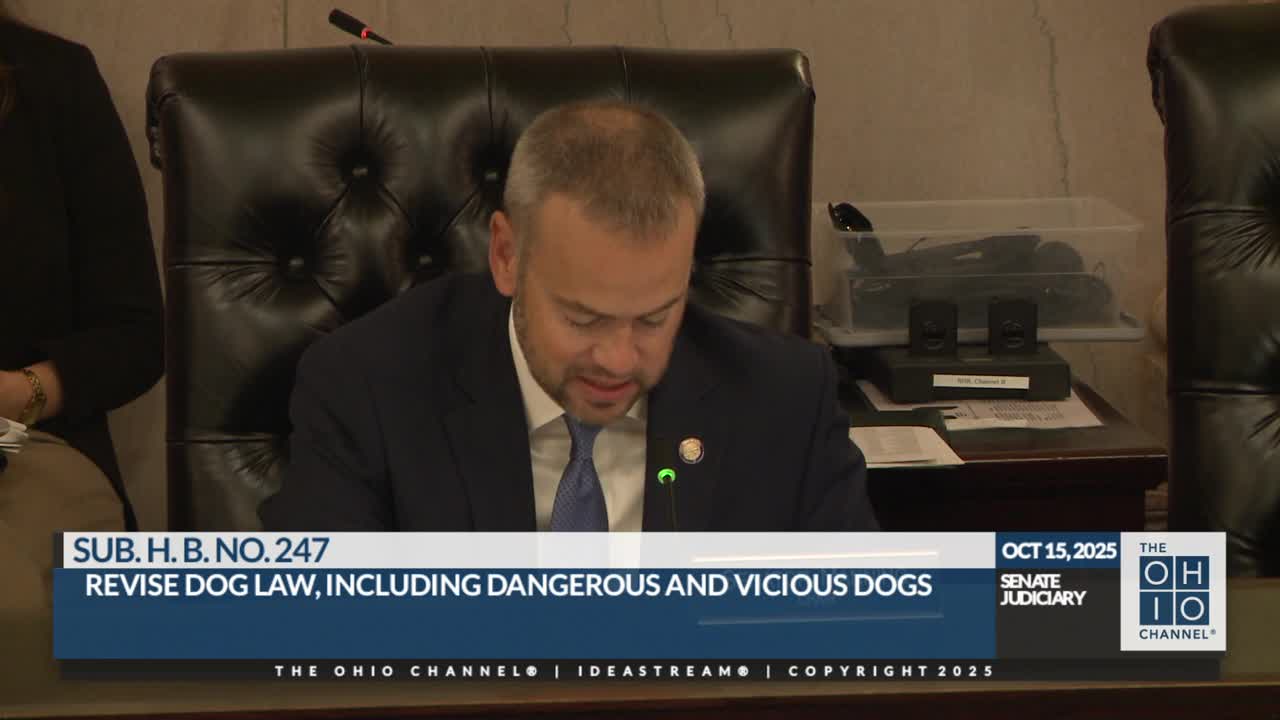
Seventh‑grader Avery Russell testified before the Senate Judiciary Committee about being mauled by two XL American Bully pit‑type dogs, describing the attack, prolonged recovery and ongoing surgeries as she urged passage of House Bill 247, commonly called Avery’s Law.
The bill would change Ohio’s approach to dangerous and vicious dogs, replacing the so‑called “one free bite” rule and expanding tools for dog wardens and prosecutors to impound animals, seek court designations and pursue larger penalties for owners whose dogs cause serious injury or death.
Avery Russell recounted the attack’s aftermath and medical treatment: “I was in excruciating pain, unable to move, and I just kept thinking, I want my mom,” she told the committee. She said she has undergone multiple surgeries — “I’ve had six surgeries. Number seven is coming in December” — and said the law would help prevent other children from suffering similar harm.
Her mother, Drew Russell, told the committee the criminal sentence the dog owner received after the attack left the family frustrated. “She got four days in jail…three years’ probation, but she got to keep one of her violent dogs,” Drew Russell said. “I was truly disgusted with the system.”
Local officials and animal‑control leaders testified in support of the bill. Licking County Commissioner Tim Bubb, past president of the County Commissioners Association of Ohio, said HB 247 updates statutes governing nuisance, dangerous and vicious dogs, creates a court hearing process to designate dogs based on criteria in the bill, and replaces the existing one‑free‑bite rule with provisions that permit designation after a single incident that kills or causes serious physical injury.
Larry Williams, chief dog warden for Licking County and southeast director for the Ohio County Dog Wardens Association, described cases he has investigated in which dogs previously designated dangerous later attacked again, and urged the committee to give wardens authority to impound dogs that commit unprovoked vicious acts. Williams detailed two specific cases with serious injuries and said current outcomes often leave dogs in owners’ homes after only minor misdemeanor charges against owners.
America Andrade, Reynoldsburg city prosecutor who handled Avery’s case, described how local laws and the state code failed to deter severe attacks and explained the city’s recent local ordinance — identified in testimony as ordinance No. 206‑2025 and locally titled Avery’s Law — that raises penalties and creates a prima facie standard for failures to control dangerous dogs when invitees are injured. Andrade said that under current state law many prosecutions remain unclassified misdemeanors with maximum fines as low as $250 and that judges often impose far less than the maximum.
Andrade told the committee the local ordinance now makes certain offenses a first‑degree misdemeanor and includes mandatory minimums in some circumstances; she said the city has already filed cases under the new ordinance. She said HB 247 would bring state law in line with the city changes and would allow prosecutors in other jurisdictions to seek higher penalties and felony charges in specified situations.
Testimony to the committee also cited proposed statutory changes offered in HB 247 as examples. One quoted passage in testimony described proposed section 955.22(2): “no owner, keeper or harborer of a dangerous or vicious dog shall negligently fail to prevent the dog from committing a vicious dog act that involves injuring or killing a person. Whoever violates this division is guilty of a felony of the third degree.” Proposed section 955.24(2) was read as imposing a duty to securely confine dangerous dogs inside dwellings when invitees are present so that “there is no reasonable probability that the dog comes into contact with the invitee.”
Speakers asked the committee to consider practical sentencing effects prosecutors face when choosing charges. Andrade said a first‑degree misdemeanor allows a judge more days of possible incarceration to hold “over” a defendant during probation, which prosecutors consider a practical deterrent. She told senators that if HB 247 permitted some offenses to be charged at a higher misdemeanor level, judges would have more sentencing days available to deter future misconduct.
Committee members took no vote on the bill at the hearing. Chair Manning closed the testimony by noting written proponent submissions from organizations including the American Kennel Club and Nationwide Children’s Hospital and recorded the testimony as the second hearing on House Bill 247.
The record before the committee included the family’s account of the attack, prosecutorial details about local charging decisions, dog‑warden case files describing severe maulings and a description of how the bill would alter Ohio Revised Code provisions governing dangerous and vicious dogs.
Avery’s testimony, and the detailed on‑the‑record descriptions of injuries and sentencing outcomes, framed proponents’ central argument: current state remedies do not adequately protect victims or prevent repeat attacks, and statutory changes are needed to align penalties and enforcement authority with the consequences of serious unprovoked dog attacks.
No formal committee action was taken on HB 247 at the hearing; proponents told senators they plan to continue advocating for the bill and to provide additional evidence and testimony in subsequent committee proceedings.
Members of the public who submitted written proponent testimony included the American Kennel Club and Nationwide Children’s Hospital, the committee record shows. The city of Reynoldsburg noted it passed a local ordinance (Avery’s Law) in July, and representatives from several legislative districts were named as sponsors or supporters during testimony.