Get Full Government Meeting Transcripts, Videos, & Alerts Forever!
Get email alerts on the Guardianship topic
No spam. Unsubscribe anytime.
Opponents urge clarity on evidence standards after committee amends supported decision-making language in SB 35
Summary
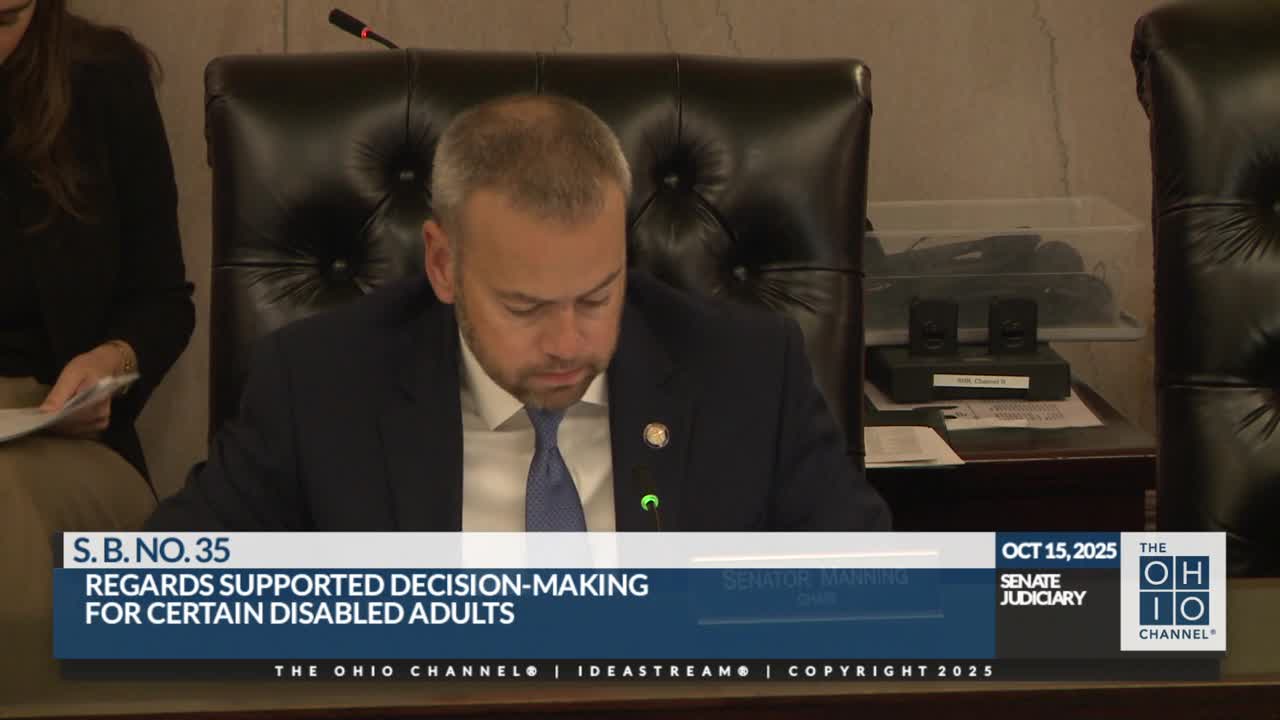
Opponents of Senate Bill 35 warned the committee that removing the term "plan" from evidence standards could lower the bar for contesting guardianship; the committee adopted an amendment clarifying that supported-decision agreements must be entered into voluntarily by an adult of sound mind.
Opponents of Senate Bill 35 told the Senate Judiciary Committee on Wednesday they remain concerned about evidentiary standards for presenting supported decision-making as a less-restrictive alternative to guardianship, even after the committee adopted an amendment clarifying the requirement that an adult entering a supported-decision agreement be of "sound mind."
Carolyn Larman, who testified in opposition, said the committee's amendment requiring that an adult with a developmental disability be "of sound mind" to enter a supported decision-making plan was an improvement, but that removing the word "plan" from the evidence standard weakened the protection. "Previously the bill required a supported decision-making plan or agreement as evidence; now evidence could be informal help given 'from time to time' — a lower bar to contest guardianship," Larman said.
Larman told the committee she feared informal or anecdotal testimony about occasional assistance could be used to argue against the need for guardianship where vulnerable individuals may require stronger legal protections. "Guardianship is the one thing that has protected them," she said, urging lawmakers to consider requiring a formal, written plan as proof of an effective less-restrictive alternative.
Committee leadership responded that sponsors and opponents want similar outcomes and encouraged continued work on language. The committee adopted the amendment and proceeded toward a planned roll call on the bill; witness testimony was entered for the record and the committee's roll was held open until 11:30 a.m. for votes that followed later in the session.
No final changes were adopted on the grounds during this hearing beyond the adopted amendment clarifying "sound mind" language; opponents were invited to continue working with sponsors to refine evidentiary standards for probate court hearings.