Get Full Government Meeting Transcripts, Videos, & Alerts Forever!
Get email alerts on the Public Comment Minimum Housing topic
No spam. Unsubscribe anytime.
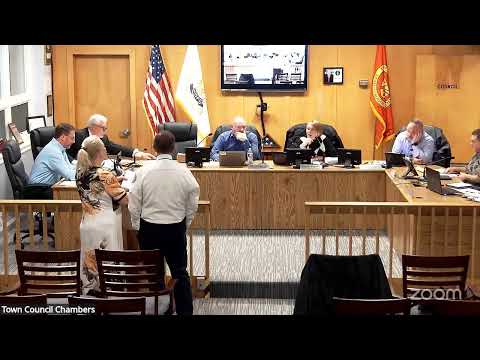
West Warwick residents tell council municipal-court outcome left them dissatisfied in long-running lighting dispute
Summary
Residents of Meadow Street described a multi-year dispute over outdoor lighting with neighbors and said a municipal-court ruling and follow-up enforcement left their concerns unresolved; town officials replied that the council cannot rehear municipal-court decisions and suggested legal appeal or other remedies.
Two West Warwick residents told the Town Council during public comment that a multi-year dispute with nearby neighbors over high‑intensity exterior lighting has harmed their health and quality of life and that municipal-court proceedings did not resolve the matter to their satisfaction.
Guillermo Lugo and Shalena Smith, who said they live at 24 Meadow Street, described repeated glare from commercial-style spotlights on an adjacent property, alleged misleading guidance from the town’s minimum-housing official and procedural confusion during municipal-court proceedings. They said they were fined in municipal court and remain distressed by the continuing glare and by what they described as an unclear path to appeal.
Lugo said he and his wife had attempted neighborly outreach and had pursued the complaint through the building/minimum-housing office. He said the municipal-court verdict resulted in a $500 fine and roughly $78 in court costs ordered in favor of the plaintiffs (the transcript records those amounts as cited by the residents). He and his wife said they believed they were led to expect they would be allowed to present broader evidence at hearing and said they were surprised by how the municipal-court process unfolded.
Town staff and council members present explained procedural limits: the council appoints the municipal-court judge and enacts ordinances, but it is not a judicial body and cannot rehear or overturn a municipal-court decision. Town counsel and staff advised the residents that an appeal would generally need to proceed to superior court and that the town could not provide legal advice or steps for a private appeal. The town recommended consulting an attorney and noted the separation between administrative/legislative duties and judicial proceedings.
Minimum-housing director Charles Davy (name referenced in public remarks) and other staff were named in residents’ statements as having handled earlier stages of the complaint; council members indicated they were aware of the dispute and encouraged residents to pursue legal appeal or civil remedies if they wished to contest the municipal-court outcome. No action was taken by the council during that meeting on the specific nuisance complaint.