Get Full Government Meeting Transcripts, Videos, & Alerts Forever!
Get email alerts on the Zoning Local Law D topic
No spam. Unsubscribe anytime.
Town continues public hearing on zoning update; draft eliminates marinas and refines waterfront definitions
Summary
The Town Board continued a public hearing on 'Local Law D' to amend zoning rules. Speakers urged caution on cannabis dispensary density, and the board and its attorney refined definitions for water-dependent uses and removed marinas from permissible uses in waterfront conservation areas to align with the town’s LWRP and comprehensive plan.
The Town Board continued the public hearing on proposed Local Law D on Tuesday and set a new continuation date of Jan. 29, 2025, after additional written comments and revisions. The law would update the town zoning code and includes clarified definitions for boat ramps, boat clubs and docks, a refined wetlands definition and an explicit exclusion of marinas from permitted uses in waterfront conservation areas.
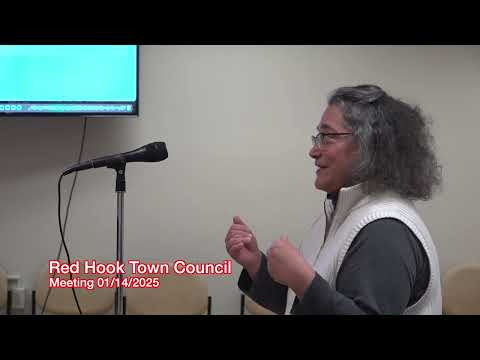
Resident Laurie Urban spoke during the hearing, saying the board should not “encourage more marijuana dispensaries” in a small town already hosting at least one operating dispensary and another planned location. “Perhaps we don't need to encourage more marijuana dispensaries,” Urban said, urging the board to “move forward cautiously.”
Town counsel and planner Ted Fink walked the board through Part 2 and Part 3 of the State Environmental Quality Review (SEQR) and the Local Waterfront Revitalization Program (LWRP) consistency analysis. Fink said the EAF’s Part 2 results remain largely unchanged after the minor edits: the only section that typically requires further Part 3 analysis is potential impacts on historic and archeological resources. On coastal consistency, he emphasized that the comprehensive plan favors “passive and water-dependent recreation” and that marinas would not be consistent with the town’s stated waterfront objectives.
Fink reviewed the waterfront inventory and concluded that very few parcels along the Barrertown waterfront could practically host a marina: most lots there are smaller than the five-acre size guidance in the zoning, the Red Hook Boat Club owns two contiguous parcels totaling roughly 2.37 acres, and the Edgewater Estate (an 11.6-acre parcel held by a preservation trust) is historically protected and designated as museum property. Fink also noted shoaling and shallow water conditions in some bays that would make marina development impractical without dredging.
The board discussed drafting clarifying language (including definitions based on the American Planning Association’s model definitions) and removing references that tied local rules to federal definitions that are in flux. The town will post revised documents at the clerk’s office and continue the hearing on Jan. 29. Board members encouraged additional written comments and signaled they will consider public input and any new edits at that next hearing.
No final vote was taken on the zoning changes at Tuesday’s meeting; the board formally extended the hearing and accepted written comments into the record.