Get Full Government Meeting Transcripts, Videos, & Alerts Forever!
Get email alerts on the Budget topic
No spam. Unsubscribe anytime.
Region 15 superintendent presents 2025–26 proposed budget; board debates class sizes, facilities and data investments
Summary
The superintendent presented the proposed 2025–26 budget for Regional School District 15, detailing staffing proposals, capital and facility needs and planned investments in a district data manager and data-warehouse licensing.
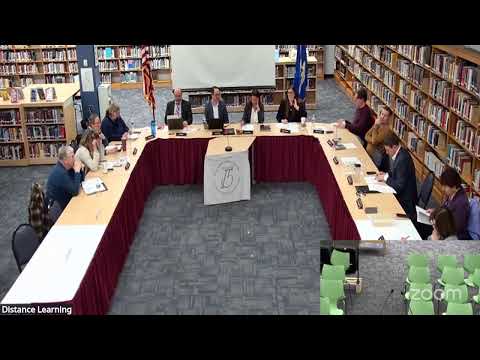
The superintendent presented the proposed 2025–26 budget for Regional School District 15 at the board’s Feb. 24 meeting, explaining projected staffing changes, capital needs and proposed investments in data systems and facilities management.
The budget presentation outlined a proposed 4.49% increase year-over-year driven by staffing, contractual obligations and inflationary costs; identified a need to restore a director of facilities position (estimated cost about $125,000) and recommended adding about $100,000 annually to the operating capital line to address end-of-life HVAC and roof work. The superintendent said the district currently manages roughly 700,000 square feet of building space and has an operating capital balance of about $475,000.
Board members focused much of their questioning on class-size impacts and where newly budgeted FTEs would be allocated. The superintendent and staff explained planned section reductions and additions at the elementary level — a net increase of one elementary classroom teacher overall, with specific additions at Longmeadow and reallocation of an existing vacant FTE — and said the district expects enrollment to begin increasing over the next decade. Board members raised repeated concerns about physical classroom space at Park/elementary schools and whether cost-neutral staffing reallocations had led to larger class sizes this year.
The presentation detailed several cost lines and contingencies. Health insurance projections show an approximate 13% increase for next year. The superintendent and staff described the state’s excess-cost special education reimbursement as a central variable: recent legislative action could move reimbursement from roughly 60% this year toward an estimated 72% next year, a change the presenters said would materially reduce the district’s special-education expense exposure. The superintendent said a 1% change in that reimbursement equals about $1 million and estimated a roughly $300,000 swing in the district’s projected revenues tied to recent legislative developments.
Proposed new positions in the recommended budget included a facilities director and a district data manager. The data manager would be responsible for consolidating and maintaining the district’s disparate data sources (PowerSchool, assessment data, spreadsheets and other systems), creating teacher-ready reports and managing user access; staff estimated an initial annual licensing cost for a data warehouse at roughly $18,000 and said the data role could be created with a minimal net FTE cost by repurposing a currently vacant central-office support line.
On capital needs, presenters urged proactive replacement of aging HVAC units — several at or near end of life — and noted that a multiyear capital plan would position the district to apply for state reimbursement. The presentation said reconstructing or replacing major elements in an emergency would likely disqualify the district from some state funds.
Board members and staff discussed contingency plans if the state reimbursement does not reach the 72% estimate: the district has preserved a special-education contingency line in the proposed budget and said it would monitor legislative outcomes closely and could delay or freeze nonessential initiatives if required. The superintendent said the district expects to know the likely final state position before the end of the legislative session and that the board would be given options for adjustments.
The board approved several routine items later in the meeting, including establishing the high school graduation date for June 14, 2025, and approving the 2025–26 miscellaneous salary rate schedule. The minutes approvals for prior meetings were also moved and approved with recorded abstentions in some cases (see Votes at a glance).
The superintendent and staff said additional budget workshops and more detailed spreadsheets (including the classroom-level section counts, enrollment by grade and average class-size calculations) will be posted to the district website and that further workshops will be scheduled to drill into specific program lines and capital scenarios.
Ending: Board members requested follow-up detail on class-size models, the proposed facilities director job description, implementation timing for the data-warehouse project and potential physical-space options. Staff said the full budget book and supporting spreadsheets would be posted the following morning and invited further questions in the running public question list.