Get Full Government Meeting Transcripts, Videos, & Alerts Forever!
Get email alerts on the Public Safety Benefits Ptsd topic
No spam. Unsubscribe anytime.
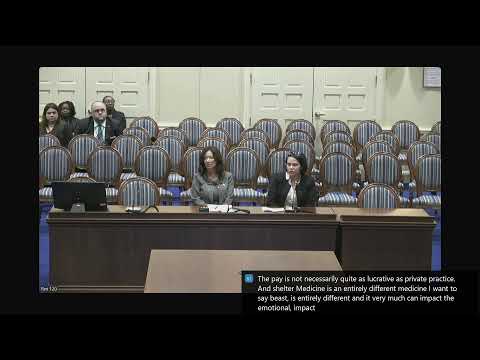
Panel urges committee to extend death and disability benefits to volunteers with service-related PTSD (HB76)
Summary
Delegate Mary Lehman told the House Appropriations Committee HB76 would expand Maryland’s death and disability benefits to include volunteer and career public safety personnel whose permanent disability or death is attributed to job‑related PTSD or trauma‑related conditions.
Delegate Mary Lehman and multiple witnesses asked the House Appropriations Committee for a favorable report on House Bill 76, legislation that would extend death and disability benefits for qualifying Maryland public safety personnel who die by suicide or become permanently disabled because of job‑related post‑traumatic stress disorder (PTSD) or other trauma‑related mental‑health conditions.
The bill would amend the Public Safety Article to make Maryland’s state-level disability and death benefits for public-safety personnel align with federal rules enacted in 2022. It would cover law enforcement officers, correctional officers, volunteer and career firefighters and rescue squad members, certain public-safety aviation employees, hazardous‑materials responders, some veterans who served in Afghanistan or Iraq, and 9‑1‑1 call takers.
Supporters included volunteer fire chiefs, association trustees and clinicians. Janet DeMarin, a volunteer fire chief, described a volunteer member who committed suicide and testified there were no benefits available to that firefighter’s family under the current framework. Joel McCrae of the Maryland State Firefighters Association said the bill recognizes PTSD and related disorders as occupational hazards and noted the board that administers volunteer benefits is funded with annual state appropriations — a point he said the fiscal note should reflect.
Several witnesses described research linking first‑responder occupational stress to increased suicidal behavior and mental‑health problems. Hope Larson, a board‑certified trauma counselor and chaplain for multiple public‑safety agencies, described recent first‑responder suicides and said the bill would provide critically needed support for affected families. Sarah Laird, whose husband was killed in a line‑of‑duty incident and who attends first‑responder grief groups, urged lawmakers to recognize suicide deaths connected to service as causally linked to the job.
Witnesses and the bill sponsor discussed whether the bill’s local implementation is mandatory or opt‑in; the sponsor said he would follow up on language and fiscal‑note questions. Joel McCrae told the committee that the fiscal note understates state exposure because the volunteer benefits are financed from an annual state appropriation and additional covered claims could increase future state spending.
The committee did not record a final vote during the hearing. Supporters urged a favorable report and staff follow up on fiscal and drafting clarifications.