Get Full Government Meeting Transcripts, Videos, & Alerts Forever!
Get email alerts on the Workplace Safety Public Sector topic
No spam. Unsubscribe anytime.
Committee hears Davis Martinez Act to extend workplace safety enforcement to public employers
Summary
Delegate Jared Solomon asked the House Appropriations Committee to give a favorable report to House Bill 176, the Davis Martinez Public Employee Safety and Health Act, which would require MOSH to adopt a workplace-violence prevention standard for public employees, create a MOSH public-sector unit, and lift an exemption that largely prevents penalties for public employers.
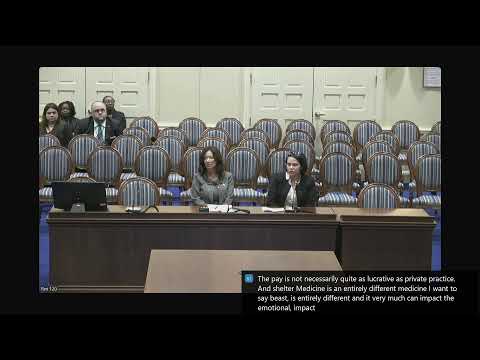
Delegate Jared Solomon asked the House Appropriations Committee to give a favorable report to House Bill 176, the Davis Martinez Public Employee Safety and Health Act, during a lengthy hearing that included union leaders, affected family members and state agency representatives.
The bill would direct the Maryland Occupational Safety and Health (MOSH) program in the Department of Labor to develop a workplace-violence prevention standard for public employees, create a dedicated MOSH unit to focus on public-sector health and safety, and remove the existing exemption that effectively prevents most penalties against public employers for workplace safety violations. Solomon said the measure honors Agent Davis Martinez, a parole agent who was murdered while conducting a routine home visit, and aims to “add accountability” so public servants do not face preventable fatal risks on the job.
Supporters — including AFSCME Council 3, the Maryland State Education Association, municipal unions and family members of public employees who died on duty — described repeated and, they said, preventable tragedies in Maryland public workplaces. Reneka Robinson, president of ASKME Local 3661, testified that agent Martinez’s death followed reports from members warning management about safety risks; Robinson said MOSH had issued a citation to the Department of Public Safety and Correctional Services. Antoinette Ryan Johnson, president of City Union Baltimore, cited a MOSH inspection at the Patapsco wastewater treatment plant that documented 24 serious violations but recommended $0 in penalties under current law.
Labor and safety experts said penalties are important to incentivize employer compliance. Jordan Barab, a former deputy assistant secretary at federal OSHA, outlined how MOSH penalty averages compare to federal OSHA and urged the committee to remove the exemption that shields public entities from financial consequences. AFSCME and other unions said the bill would align public-employer accountability with existing private-sector enforcement tools.
The Department of Labor’s Division of Labor and Industry testified it supports the bill’s intent and has worked with sponsors on technical amendments; MOSH’s commissioner said he expects to collaborate on a practicable workplace-violence standard if the bill passes. Local governments and the Maryland Municipal League expressed concern about specific provisions including notification mechanics and potential procedural burdens; sponsors said they have negotiated amendments (for example, clarifying email/notice requirements and removing a proposed criminal penalty provision) and were close to resolving differences.
Several witnesses urged the committee to move the bill promptly. Patrick Moran, AFSCME Maryland Council 3 president, and other union leaders highlighted multiple deaths tied to workplace conditions in the past year and said restoring penalties and a public-sector focus in MOSH would improve prevention. Solicitations for clearer timelines and technical support for MOSH to implement the standard were raised during questioning.
No final committee vote was recorded during the hearing. Sponsors and stakeholders said they expected to continue negotiating technical amendments and to bring an updated draft back to the committee for a vote.
The bill drew broad support from public-employee unions, school-employee groups and public-safety advocates; the Department of Labor indicated conditional support with amendments; local-government associations said they were working with sponsors to reach agreement before final passage.