Get Full Government Meeting Transcripts, Videos, & Alerts Forever!
Get email alerts on the Municipal Finance Audit topic
No spam. Unsubscribe anytime.
External auditors begin annual financial audit; city focus on ERP, OPEB and federal compliance
Summary
Klinger Hagerman presented the audit kickoff to the Laramie City Council, outlining scope and timeline for the fiscal year ended June 30, 2025, and flagging continued attention to the new ERP implementation, the OPEB plan change, single‑audit federal compliance and GASB updates.
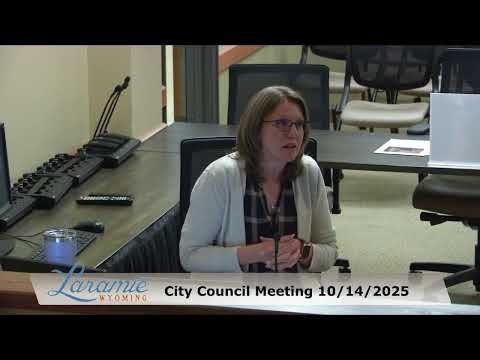
Micah Klinger, an audit partner with Klinger Hagerman, briefed the Laramie City Council on the firm’s annual audit approach for the fiscal year ended June 30, 2025, during the Oct. 14 work session.
Klinger said the audit will be performed under U.S. generally accepted auditing standards and Government Auditing Standards and will include a single audit of major federal programs. He described key risk areas auditors will focus on this year: the recent ERP implementation, the city’s change to the state OPEB plan and related liabilities, federal grant compliance under the OMB compliance supplement, and implementation of GASB guidance (GASB 101) related to compensated absences.
Klinger said fieldwork is underway in October and continues into November, with the city’s audited annual comprehensive financial report and audit opinions targeted for issuance in December. "Our audit planning started back in August and September," he told the council, and fieldwork and testing were “heavy this month, the month of October,” with report preparation slated for November and issuance by year‑end.
Council members asked how long Klinger Hagerman has worked with the city; Klinger said this was the firm’s fourth year as the city’s external auditors. He also discussed prior audit history: auditors had required a restatement in a prior year after additional factors changed the assessment of an OPEB balance; that restatement produced a formal finding and led to corrective actions. Klinger said auditors sometimes report matters sooner if they encounter difficulties completing audit procedures or if suspected fraud arises, but said no such issues had been reported to the council at this point.
Klinger also highlighted that auditors evaluate the internal control environment and IT systems that feed financial records. He described continuing assessment of materiality throughout the audit and said the firm will communicate significant issues at the conclusion of fieldwork or sooner if necessary.
City staff and council members asked questions about the ERP migration and about whether the city has improved in response to prior audit recommendations. Klinger said the city team has been receptive to best‑practice suggestions and that he observed the ERP implementation process to be smoother than many comparable projects from an audit standpoint.
Ending: Auditors continue fieldwork; no audit opinions were issued at the meeting. Council members received the kickoff report and asked staff to continue coordination with auditors as testing proceeds toward a December issuance.