
Countyinsurance consultants recommend stop-loss carrier change and program tweaks; court's finance committee endorses recommendations
Get AI-powered insights, summaries, and transcripts
Subscribe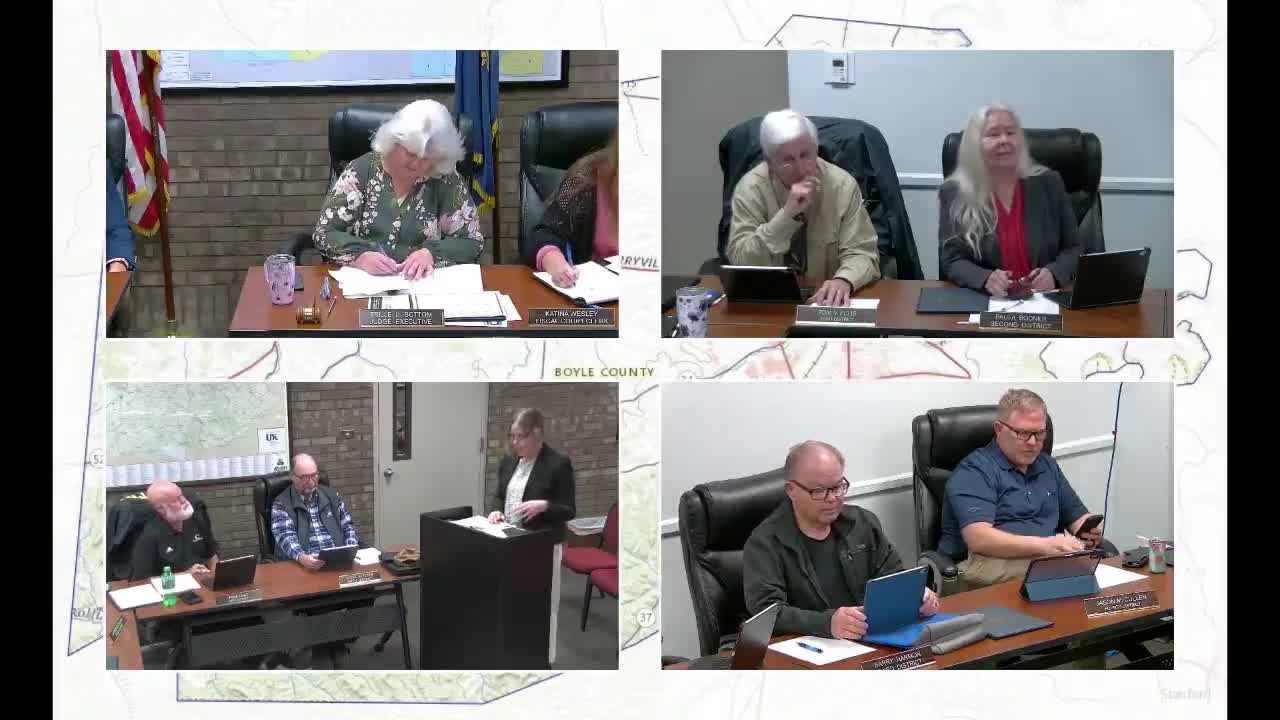
Summary
Consultants for Boyle Countyemployee benefits told the court the county's health-plan costs have trended below national averages and recommended switching stop-loss carriers to reduce premiums, plus other administrative changes and a pilot for sourcing brand drugs from Canada.
Consultants advising Boyle County on employee benefits presented an annual renewal update to the fiscal court on Oct. 28 and recommended several administrative changes intended to reduce costs and streamline operations.
Lisa Sam (staff attorney with benefits consultant) and Michelle Mizuno (staff CPA) reported that the county's medical plan costs have risen at an average annual rate of about 4% over six years, below national trends. They recommended renewing third-party administrator contracts and making program changes to specialty-drug administration.
On stop-loss coverage, consultants said the incumbent carrier Symetra proposed a 32% renewal increase; they obtained multiple quotes and recommended a switch to a plan issued through 1 80/Gerber that would be about 10.3% below current premiums, a projected $38,000 savings versus 2025. The finance committee had reviewed the recommendations on Oct. 20 and told the court it supported the consultants' proposals.
Consultants also recommended moving specialty-drug outsourcing from Rx Help Centers to the Benefit Preservation Program managed by MedBend to improve member experience and increase savings, and they described a voluntary program called Rescribe that sources certain brand medications from Canada to reduce costs for non-specialty brand drugs. Consultants cautioned about temperature-sensitive shipments and noted the county would not require participation.
County officials discussed weight-loss drugs (GLP-1 related medications) and ways to make them available without excessive plan cost, including direct-to-consumer purchase programs and reimbursement via health-reimbursement arrangements. No final policy change on those medications was adopted at the meeting; consultants said they would continue to explore options and return with budget-level recommendations for next year.