
Zoning board denies developer's request to build 43‑unit apartment at 1139–1151 Washington St.
Get AI-powered insights, summaries, and transcripts
Subscribe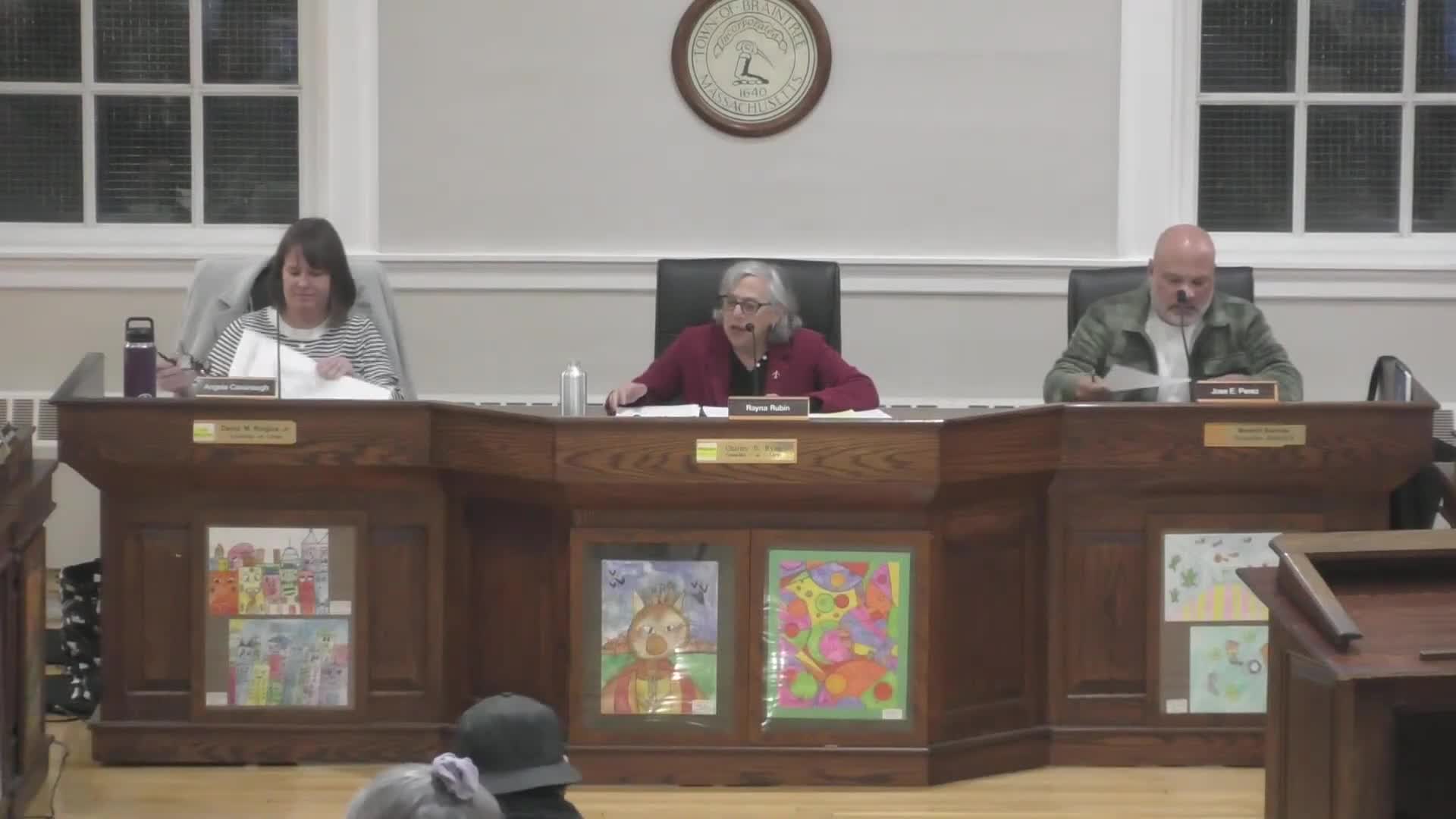
Summary
The Braintree Zoning Board of Appeals denied a petition seeking three variances that would have allowed a developer to construct a 43‑unit multifamily building at 1139–1151 Washington Street on a floodplain‑adjacent, irregularly shaped 1.84‑acre parcel.
The Braintree Zoning Board of Appeals denied a petition seeking three variances that would have allowed a developer to construct a 43‑unit multifamily building at 1139–1151 Washington Street, a site the applicant described as a 1.84‑acre, environmentally constrained parcel at the edge of South Braintree Square.
The applicant, Steve Young of Mona River LLC, and his attorney, Tom Kavanaugh, presented a revised proposal that reduced an earlier application from higher unit totals to 43 units, added a 10 percent affordable housing component and preserved 90 on‑site parking spaces. At the hearing, Young and his team cited soil, topography, the riverfront buffer and floodplain constraints as the practical hardships that justify relief from the zoning ordinance.
"We are now looking at a reduced total of 43 units," attorney Tom Kavanaugh told the board while explaining changes made after prior hearings. The revised plan included a partially below‑grade parking level, two stories of habitable space at the northern corner facing Jefferson Street (with the above‑grade portion set back 30 feet from the property line) and environmental remediation and stormwater controls intended to improve water quality in the adjacent resource areas.
Engineers told the board the site will be subject to Conservation Commission and MassDEP review and that the project will be designed to meet current state and town stormwater standards. Brad McKenzie of McKenzie Engineering said the project will file a Notice of Intent with the Conservation Commission and implement stormwater treatment to reduce runoff into the bordering vegetated wetlands and the river.
Neighbors strongly opposed the application and cited traffic, school impacts, neighborhood character and safety concerns. Pat Mulkerin, a nearby resident, told the board, "I staunchly oppose this project. Hearing the developer's hardships, honestly, I hear rubbish." Several other residents said the proposed mix of primarily two‑bedroom units would likely add school‑age children, increase school and municipal operating costs and worsen traffic on Washington, Jefferson and adjacent streets.
A traffic memo submitted by the applicant's traffic consultant, Van Ness & Associates, concluded the development would generate approximately one additional vehicle every three minutes during weekday peak hours and that removal of the existing truck traffic associated with Dalton Water would offset some impacts. The memo stated the peak‑hour increase "would not be perceivable outside of the immediate proximity of the project site and would not result in a material increase in motor delays or vehicle queuing over existing conditions." Several speakers disputed that assessment, saying their daily experience at nearby intersections is already congested and that the cumulative effect of planned and approved projects nearby (referenced by residents during the hearing) would be materially different.
Board members acknowledged the site's constraints, including a 15‑ to 20‑foot grade change on parts of the parcel and floodplain/wetland jurisdiction, and some members praised aspects of the revised design such as pulling the northern wing back, removing balconies on the Jefferson Street side and the inclusion of affordable housing. But several members also said they were concerned about the density relief requested and the precedent granting such relief on similarly zoned parcels might set for the town.
After closing the public hearing and discussing the application, the board voted to deny the variances. Town staff later advised the board that the written decision of denial will be finalized and filed with the town clerk within 14 days.
Next steps: staff will prepare the board's written decision and file it with the town clerk. The applicant may seek further review options permitted by town procedures, including potential appeal or resubmission of a revised proposal.