Bountiful council narrows future land-use map, confirms corridor overlays and allows cottage courts in single‑family zones
Loading...
Summary
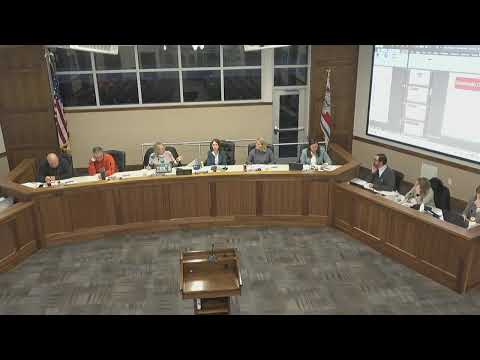
Bountiful City Council at a Feb. 11 work session reviewed and provided direction on several future land‑use “place types” in the city’s comprehensive general plan update, confirming overlay boundaries for commercial corridors and neighborhood centers and agreeing to allow cottage courts within the single‑family residential place type while leaving detailed standards to future code changes.
Bountiful City Council at a Feb. 11 work session reviewed and provided direction on several future land-use “place types” in the city’s comprehensive general plan update, confirming overlay boundaries for commercial corridors and neighborhood centers and agreeing to allow cottage courts within the single-family residential place type while leaving detailed standards to future code changes.
City staff led the presentation. Francisco Astorga, a planning staff member, told the council these place types “are not future zoning categories or designations, but these are generalized areas that ultimately will provide a guidance of the future zoning of the city.” The council proceeded to work through community commercial, neighborhood-center and neighborhood-corridor place types, and discussed single-family residential language including cottage courts.
The discussion centered on several map edits and policy clarifications. Council members confirmed a community commercial place type along parts of the 500 South corridor (extending east from Highway 89) and authorized a community-commercial overlay for Fourth North through 500 South with the underlying place type shown as neighborhood-mixed residential for much of that corridor. Astorga said the overlay approach is intended to “provide flexibility to each site” so both neighborhood character and corridor-level commercial opportunities can be considered when implementing future zoning.
Council members discussed a short segment of 500 South bounded roughly between 100 East and 400 East that is primarily one-story residential in character. Some members, including Council member Bradshaw, expressed concern about converting that strip wholesale to commercial; the council agreed to use an overlay treatment for that leg of the corridor so the underlying residential place type remains but commercial options can be considered where appropriate.
The council also reviewed the neighborhood center nodes (the Mandarin site and the Corner 22/Dick’s Market area were highlighted) and agreed the neighborhood-center overlay language should capture a mix of small-scale commercial uses and compatible residential types, including limited residential units above or behind commercial storefronts.
On the neighborhood-corridor overlay along Fourth North, members debated whether to retain a “transit-ready development” overlay or replace it with the neighborhood-corridor overlay. After discussion the council directed staff to extend the neighborhood-corridor overlay along Fourth North from the freeway/bottom of the valley through Orchard Drive, skipping over the downtown zone, while leaving the downtown zone intact. Council members said the overlay would be applied as an overlay — retaining the underlying zoning but adding flexibility where the corridor already supports mixed uses or node development.
The council also considered changing a small area east of downtown (between Fourth North and Fifth South) to neighborhood-mixed residential. Council member Murray argued that the section already contains numerous duplexes, triplexes and small apartments and that the designation would reflect existing stock. After discussion the majority accepted converting that circled section to neighborhood-mixed residential.
Separately, council members agreed to carve out a West-side neighborhood from proposed neighborhood-mix and label it single-family residential. Staff described the agreed boundary in the work session as: west boundary corridor-commercial extending to Second West, north boundary Pages Lane down to 1000 North (Centerville border reference noted), with the area designated single-family residential for the purposes of the general-plan map that will go to public review.
On housing types, the council confirmed inclusion of cottage courts as an allowed form in the single-family residential place type, while leaving detailed standards (lot size, parking, setbacks) to later implementation through land‑use code updates. As Astorga summarized the distinction between the plan and implementing code: the plan sets place-type intent and boundaries; “the zoning map and the land use code is the tool used to implement the general plan.”
What the council did not finalize were precise development standards. Members repeatedly said setbacks, parking and height limits would be set later in the zoning code work that follows public review and planning commission hearings. Astorga said staff will package the revised plan for a 30‑day public review period and then route it to the Planning Commission for their public hearings.
The council’s direction at the Feb. 11 work session is procedural and policy-level: it confirms place-type boundaries and overlay areas for public review and signals the council’s preferred approach for where to allow mixed uses, corridor flexibility, and a modest expansion of housing options (including cottage courts). The plan will next be published for a 30‑day public review period and then considered by the Planning Commission before any zoning code or map changes are drafted and adopted.