Get Full Government Meeting Transcripts, Videos, & Alerts Forever!
Get email alerts on the Water Safety topic
No spam. Unsubscribe anytime.
Kings County moves to return local primacy agency drinking‑water program to state amid staffing and funding shortfalls
Summary
Kings County’s Environmental Health Services asked the board to authorize ending the county’s LPA delegation for small public water systems and to transfer responsibility back to the State Water Resources Control Board, citing staffing limitations, increasing mandates and an annual program shortfall.
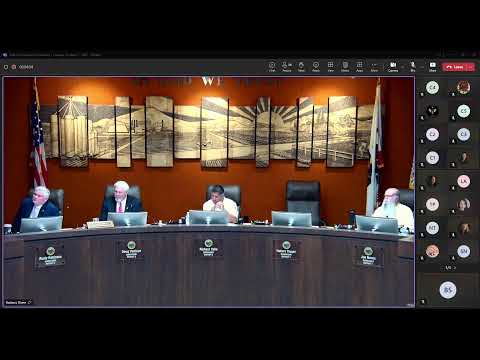
Kings County environmental health officials told the Board of Supervisors on Oct. 7 they will seek to end the county’s Local Primacy Agency (LPA) delegation for drinking‑water oversight and return the program to the State Water Resources Control Board because of funding shortfalls, staffing constraints and growing regulatory mandates.
Liliana Stranski, an environmental health specialist, said the program was established in 1993 and revised in 2014. She told the board the county currently regulates 38 public water systems, of which three are community systems, 11 are non‑transient noncommunity systems (for example rural schools and businesses), 24 are transient noncommunities (churches, mini‑marts, parks) and four are very small local systems for which the state exercises no oversight.
Stranski said changes in state law (AB 1627) expanded the universe of systems that require monitoring—tripling the number of transient noncommunity systems counted in Kings County to 24—and that the program’s fee revenue does not cover its costs. She said the county received a one‑time $91,000 grant in 2014 but that ongoing revenues are insufficient and labor costs continue to grow. The slide deck presented to the board showed an annual program shortfall that has increased even after a fee adjustment described as modest.
Stranski described the steps required to return the program: obtain board approval, provide 120 days’ written notice to the State Water Resources Control Board under the Health and Safety Code, and coordinate a transition plan that will deactivate county program elements and move reporting obligations to the state. She emphasized that the county would remain available to support local operators with outreach, emergency public notices and routine inspections for other programs the county still manages.
The board voted to authorize moving forward with ending the LPA delegation and coordinating a transition with the state; supervisors recorded affirmative votes among members present.
Ending: County staff will prepare formal notice and a transition plan with the state; details of timing and operational handoffs will be worked out in coordination with the State Water Resources Control Board.