
Lakeville Park Commission debates hybrid fee model to make league charges more equitable
Get AI-powered insights, summaries, and transcripts
Subscribe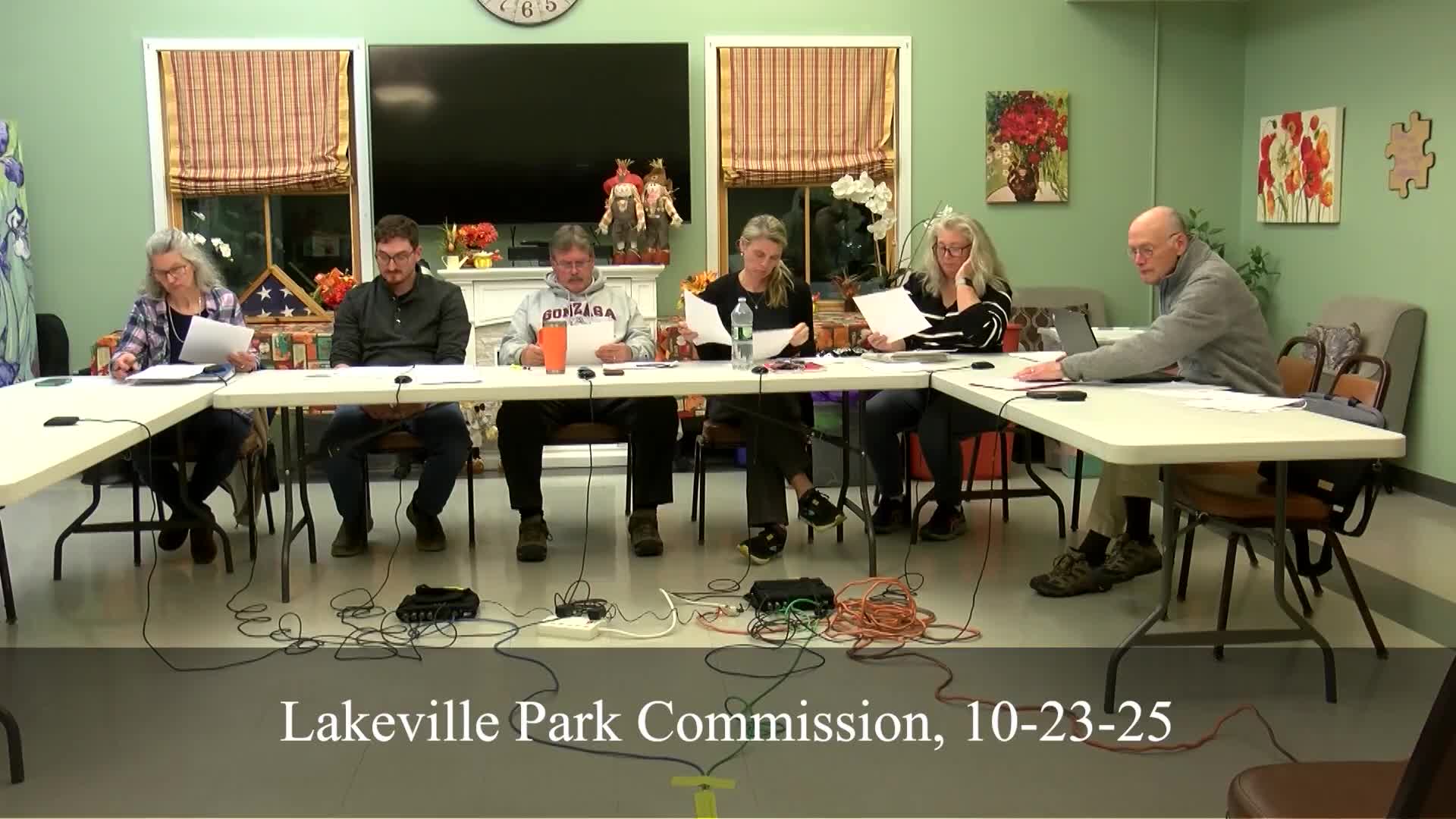
Summary
Commissioners spent more than two hours testing fee scenarios — per‑player and per‑field‑hour rates — to reduce losses on field maintenance and better align costs with usage; no final fee schedule was adopted, and staff was asked to refine spreadsheet models.
The Town of Lakeville Park Commission devoted substantial meeting time on Oct. 23 to reworking league charges for field users, testing multiple combinations of per‑player and per‑field‑hour fees intended to better match how leagues use town fields.
Staff presented a spreadsheet that models different rate combinations (examples discussed included $20 per player/$1 per field‑hour; $15 per player/$2 per field‑hour; and $10 per player/$3 per field‑hour). Commissioners and staff ran several scenarios during the meeting to see how changes would affect revenue for soccer, baseball, softball, volleyball and smaller activities such as horseshoes.
Staff said annual field operating costs (lights, porta‑potties and labor for field maintenance) total roughly $72,000. Under one hybrid model presented to the commission (labeled in the discussion as $15.02 per player and $2 per field hour), revenue projections excluding the largest multi‑town association (referred to in the transcript as FLAA) rose by about 4% compared with last year.
Commissioners repeatedly warned that steep increases could risk losing long‑standing leagues. Several members suggested pulling the multi‑town association (FLAA) out of the spreadsheet and handling that group separately because many of that association’s registered players do not use Lakeville fields for the majority of their hours. Commissioners also proposed phasing increases and adding enforcement mechanisms: requiring accurate rosters, imposing late‑filing penalties for missing paperwork, and clarifying what hours each league actually uses on Lakeville fields.
The commission discussed additional cost items not fully accounted for in the hybrid model — fertilizer, electricity for lit fields and other maintenance line items — and whether to build those costs into hourly fees or charge them separately. Commissioners also discussed practical steps to reduce maintenance burdens, such as league‑run field days and volunteer coordination.
No fee schedule was adopted. Commissioners asked staff to continue refining the spreadsheet, run scenarios that exclude FLAA, and present an overall percentage‑increase approach the commission could apply selectively (for example to baseball) so the change is more equitable while retaining league partners.