Get Full Government Meeting Transcripts, Videos, & Alerts Forever!
Get email alerts on the School Calendar topic
No spam. Unsubscribe anytime.
Lincoln County School District #2 weighs calendar options after attendance review
Summary
Trustees reviewed three years of attendance data and more than 100 public emails at a work session as they consider four‑day, five‑day and hybrid school calendars. Presenters said districtwide attendance averages about 94% and that spring break and certain Fridays show concentrated drops; the board will give direction in November and took no vote.
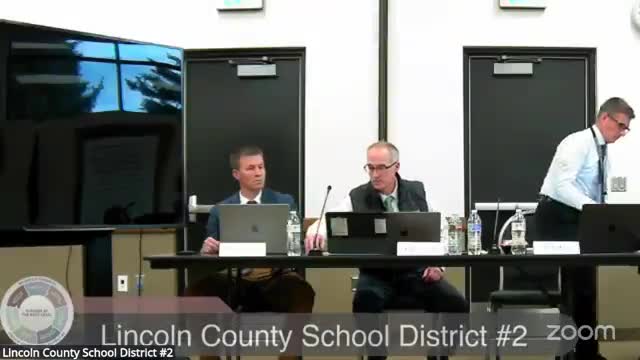
Lincoln County School District #2 trustees held a work session to review three years of attendance data and public feedback as they consider whether to keep a hybrid schedule, move to a four‑day week, or return to a traditional five‑day calendar.
Chairman Simpson opened the meeting and noted public engagement: “we've received over a 100 emails so far to date on this topic,” and said the board had read the submissions but would not take votes during the work session.
Nate Westcott, a district staff member presenting attendance analysis, told the board that “our daily average attendance is right around 94.” Westcott described a three‑year data set broken down by day and by school that the district staff used to look for patterns. He said that while some Fridays and days before breaks show concentrated drops in attendance at particular schools, the districtwide picture does not show a systematic loss of attendance on Fridays: many Fridays remained in the district’s “meets expectation” band.
Westcott highlighted that some of the lowest‑attendance days cluster around spring break and Thanksgiving and that the effect can be concentrated in a single school or spread across several. He said the district is still working to disaggregate absences that were excused for activities such as athletics and to identify when during the day students were absent.
Board members and staff emphasized the variety of public opinion. Chairman Simpson reported a hand tally of the 107 emails received: 49 favored a straight four‑day week, 63 favored a hybrid, 10 favored a straight five‑day week, 9 explicitly opposed spring break, 55 supported keeping a spring break, 5 wanted no school in June and 3 favored extending school into June. Simpson said the emails provide information but are not a substitute for the board’s deliberative process.
Presenters and trustees raised operational and equity questions that would follow any calendar change: effects on extracurricular schedules and athletics, busing and travel times for students who live far from schools, and whether reducing instructional days to the statutory minimum would require cutting or adjusting noninstructional programs such as grade‑level field trips.
The meeting produced one formal procedural action at the outset: a motion by Mr. Jenkins, seconded by Mr. Taggart, to adopt the meeting agenda. The motion carried.
Trustees did not take a calendar vote at the work session. Multiple speakers said the board intends to provide direction to the administration in November about preferred calendar parameters and a multi‑year approach rather than making an immediate final change.
The board scheduled no decision at the meeting and will continue the inquiry with additional operational modelling and public input before any formal action.