Get Full Government Meeting Transcripts, Videos, & Alerts Forever!
Get email alerts on the House Bill 247 topic
No spam. Unsubscribe anytime.
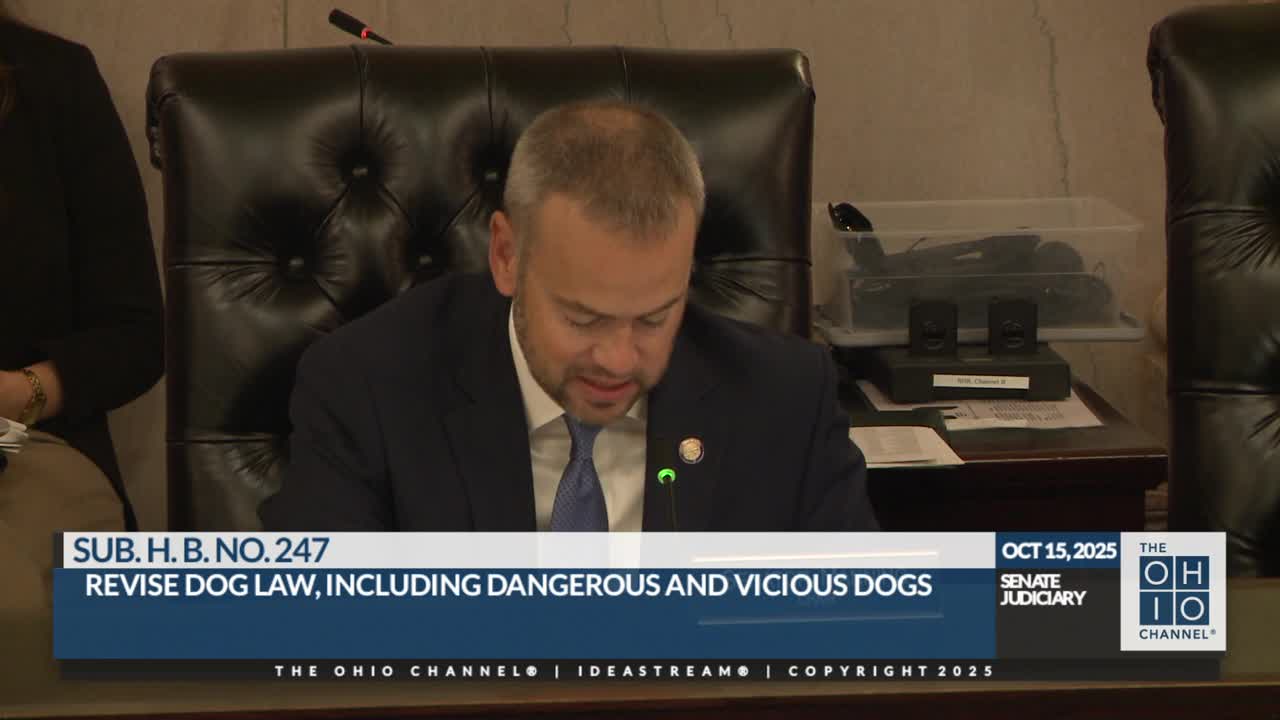
Survivor testimony centers debate on "Avery's Law" to stiffen penalties after dog maulings
Summary
A seventh-grade survivor of a dog mauling and multiple law-enforcement and county witnesses told the Senate Judiciary Committee on Oct. 8 that House Bill 247, commonly described in testimony as "Avery's Law," is needed to close legal gaps that they say let dangerous dogs remain with owners after severe attacks.
A seventh-grade survivor of a dog mauling and multiple law-enforcement and county witnesses told the Senate Judiciary Committee on Oct. 8 that House Bill 247, commonly described in testimony as "Avery's Law," is needed to close legal gaps that they say let dangerous dogs remain with owners after severe attacks.
"I truly thought I was going to die," Avery Russell told the committee, describing a play-date attack that led to numerous surgeries and ongoing rehabilitation. "The Pfeiffer Avery's Law gives me hope." The mother, Drew Russell, described lengthy hospital care, multiple surgeries, and disappointment with local sentencing that she said left the dog owner able to keep at least one of the animals.
Supporters said the bill would revise Ohio law on nuisance, dangerous and vicious dogs, remove the "one free bite" policy in practice, and give dog wardens and courts clearer authority to impound animals, order obedience training, require liability insurance, or—if warranted—order euthanasia. Tim Bubb, past president of the County Commissioners Association of Ohio and a Licking County commissioner, told the committee the bill gives local dog wardens enforcement tools and creates a hearing process to designate dogs according to statutory criteria.
Larry Williams, chief dog warden for Licking County and southeast director of the Ohio County Dog Wardens Association, described multiple unprovoked maulings and documented injuries. He said current practice often results in misdemeanor charges that do not prevent an owner from keeping the animal: "Unprovoked dog attack or maulings and fatalities are happening across Ohio without the ability to impound dogs that have committed an unprovoked vicious or dangerous dog act," Williams said in testimony.
America Andrade, the Reynoldsburg prosecutor who handled Avery's case, recounted how state law and sentencing options limited punishment. She described local ordinance changes in Reynoldsburg (titled in testimony as "Avery's Law") that raise penalties at the city level and a desire among prosecutors for expanded state authority so judges can impose stronger deterrent sentences and courts can address keeping dangerous dogs away from invitees.
Committee members were shown victim images and case histories by proponents and told the existing misdemeanor framework frequently results in fines or short probation rather than extended incarceration or removal of dangerous animals. Proponents described the bill's proposed statutory language that would create new owner duties (for example, secure confinement when invitees are present) and, in certain instances, felony-level liability for negligent failure to prevent injuring or killing a person.
No formal committee vote on HB 247 was taken at the hearing; proponents were informed the testimony would stand and written proponent statements from the American Kennel Club and Nationwide Children's Hospital were noted.
The chair recorded the testimony as the second hearing on HB 247 and invited further stakeholder work. Supporters said they will continue to press for the bill to provide increased penalties and clearer mechanisms for seizure, designation and court review.