Get Full Government Meeting Transcripts, Videos, & Alerts Forever!
Get email alerts on the Transportation Safety topic
No spam. Unsubscribe anytime.
Residents urge traffic mitigation ordinance and accessible pedestrian signals as Erie updates safety plan
Summary
Public commenters told the council the city's draft final safety action plan should include a traffic mitigation ordinance, accessible pedestrian signals before leader pedestrian intervals and use TASSA funding; commenters also raised concerns about bike‑lane design and motorized scooters.
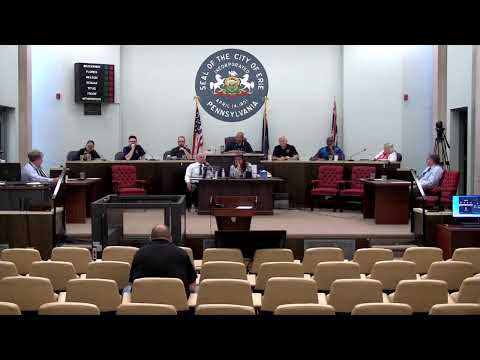
During the public‑comment period at the June 18 Erie City Council meeting, multiple residents urged the city to adopt a traffic mitigation ordinance and to prioritize pedestrian accessibility in the city's draft final safety action plan.
Bridal Tepfer of Erie said she has been urging a traffic mitigation ordinance for years and asked the city to use the plan to address funding for sidewalks and safe crossings. She noted the state TASSA grant application schedule and urged the city to apply: "That process is in process now. The application period will open on 07/14, go through 10/31. Draft applications are mandatory and due 09/05," she said.
Tepfer raised accessibility concerns in the plan's recommendations for lead pedestrian intervals and flashing mid‑block crossings, saying: "No lead pedestrian interval should go in anywhere in the city unless there is an accessible pedestrian signal. If Erie wants to join Chicago and New York and the other cities that have been successfully sued for not having APSs where they have lead pedestrian intervals, go ahead and do that." She argued flashing lights alone are not sufficient for people who are blind and said some intersections (she cited State Street and an intersection with Sixth Street in her remarks) lack accessible pedestrian signals.
Other commenters raised bike‑lane and scooter safety concerns. Robert Cherry and Bob Strasser, both Erie residents, said bike‑lane markings that place bicycle symbols in the center of narrow roadways risk collisions with motor vehicles and that motorized scooters often ignore stop signs. Strasser also suggested the city consider separated lanes where space permits and asked whether Erie should study data‑center or energy projects to expand revenue sources.
Why it matters: the safety action plan and any traffic mitigation ordinance determine how new development contributes to sidewalks, crossings and other safety features. Accessible pedestrian signals (APS) are required by some legal settlements in other cities where lead‑pedestrian intervals have been installed; public commenters asked Erie to avoid implementing lead intervals without APS devices.
Council members did not take a formal vote on a traffic mitigation ordinance at the June 18 meeting; the record shows public comments and multiple requests for staff to consider TASSA funding and design standards as the city finalizes the plan.