Get Full Government Meeting Transcripts, Videos, & Alerts Forever!
Get email alerts on the Historic Preservation topic
No spam. Unsubscribe anytime.
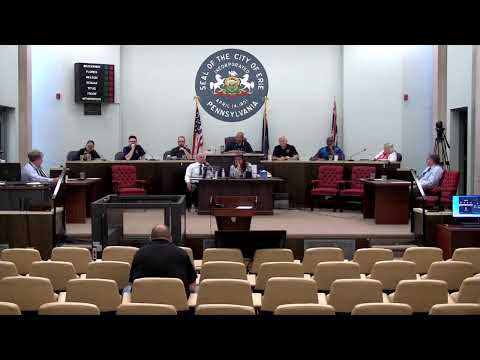
Erie City Council holds public hearing on proposed historic‑resource ordinance updates
Summary
City planners presented proposed amendments to Article 7 (historic resource protection) that would expand the Historic Review Commission, clarify who may nominate landmarks, add public‑engagement checkpoints and create an appeal path; council members indicated a vote is expected at a later meeting.
Erie City Council held a public hearing June 18 on proposed amendments to Article 7 of the city's zoning ordinance, the section that governs historic‑resource protection. Cooper Moore, assistant planner in the Department of Planning and Neighborhood Resources and secretary to the Planning Commission, and Matthew Pelcone, the city's historic preservation planner and former chair of the Historic Review Commission (HRC), explained the changes and said both commissions had unanimously recommended council approval.
Moore said the Planning Commission and Historic Review Commission had the opportunity to review the amendments and both voted unanimously to recommend approval. "For the past several months, I have been acting as the city's historic preservation planner," he said, summarizing his involvement in drafting the changes.
Matthew Pelcone said the revisions are the product of eight months of work by HRC members and city staff and aim to make the process "more transparent, more inclusive, and more equitable." He described several specific changes: increasing the HRC membership from five to seven, specifying who may submit a landmark nomination (including city council members, the mayor, a resident with at least one year of residency, and members of the HRC and Planning Commission), adding regulated public‑engagement checkpoints for creating historic districts, clarifying notification requirements for property owners and neighbors, defining timeframes for staff to move applications through the process, and providing an appeal pathway for property owners.
Pelcone said the changes also set a minimum threshold of community support required to create a historic district and add more opportunities for public meetings and notifications during the designation process. "There is a more robust access to different avenues through this where there was not before," he said, describing the new appeal options for applicants.
Council members present asked no technical questions during the hearing and expressed general support for moving the item forward. The council president closed the public hearing and indicated the council will consider the ordinance for a formal vote at a subsequent meeting rather than taking final action that night.
Why it matters: the amendments would change who can nominate landmarks, expand the review commission, and add defined public‑notice and appeal procedures that affect property owners, neighborhood groups and preservation advocates. If adopted, the changes will alter the way potential landmarks and historic districts are brought forward and reviewed by city staff and commissions.
The public hearing record closed after staff presentations and public comment; no final council vote on the ordinance was recorded at the June 18 meeting.
Closing note: council members said they expect to vote on the amended Article 7 at a future meeting after the public‑hearing record is complete.