Get Full Government Meeting Transcripts, Videos, & Alerts Forever!
Get email alerts on the Administrative Code Finance And Ethics topic
No spam. Unsubscribe anytime.
Lancaster council reviews draft administrative code sections on finance, controller qualifications and property disposal
Summary
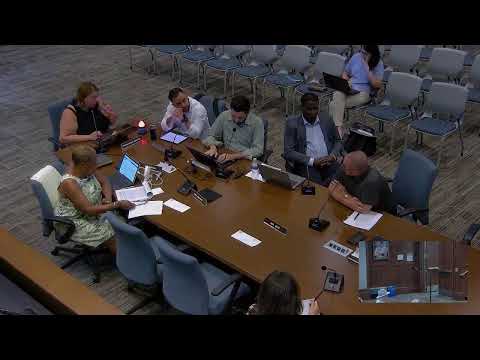
Lancaster City Council members reviewed the first half of a draft administrative code at a July 15 work session that addresses financial policy, controller qualifications and procedures for disposing of city personal property.
Lancaster City Council members reviewed the first half of a draft administrative code at a July 15 work session that addresses financial policy, controller qualifications and procedures for disposing of city personal property.
The draft section presented by a city staff member described itself as only half of the proposed administrative code. “What you have before you is only about half of the admin code. The other half will be presented to you in August. This section deals mostly and primarily with financial policy, and some other similar related matters,” the staff member said.
Council members pressed staff for clarifications on several points, including how the charter defines the elected controller and whether the draft should include thresholds for council approval when the city disposes of personal property.
Why it matters: The administrative code is intended to set recurring financial policies and operational rules for Lancaster City. Some provisions—particularly those that affect how elected offices are defined and how property is disposed—could change city practice and affect budgeting, procurement and local oversight if adopted.
Council questions and staff responses
Councilman Hirsch asked where controller qualifications appear in the governing documents and whether thresholds for personal-property disposal came from state law. “Am I correct? My understanding is that the threshold for sale of personal property as far as, like, resolution approval by council is about $2,500. Is that coming from state law?” Hirsch asked.
A staff member responded that the charter (the city’s governing document) sets qualifications for the elected controller and that the draft admin code does not redefine those charter requirements. The staff member said the charter requires a controller to be an “accountant,” a term left undefined in the charter, and that the position may appoint a deputy controller who, under the charter, must be a certified public accountant. The staff member noted these controller qualifications come from the charter’s Article 4 and related provisions.
On sale of personal property, staff explained the older Third Class City Code contains a $2,000 threshold referenced in the prior rules for when a formal bidding process is required and that, under the current draft of the admin code, no dollar thresholds for council approval of personal property disposal are set. “If the city of Lancaster wanted to dispose of a laptop, theoretically, it would need council approval regardless of the condition of that laptop,” the staff member said, noting the draft authorizes the director of administrative services to arrange sales when property is determined to have no further use and requires the director to publish rules and regulations for disposition.
Budget and policy questions
Council members asked whether the admin code can lock future annual budget allocations—such as setting a permanent percentage for reserves or guaranteeing specific allocations for programs—or whether those decisions must be made annually through the budget ordinance. A council member raised the example of protecting low-income taxpayers from future earned income tax increases.
Staff replied that while the admin code can set financial policy targets (for example, fund-balance targets or debt-service guidelines), budget appropriations must be adopted annually and cannot be pre-committed for future years. The staff member said the admin code can provide policy guidance to inform future budgets, but appropriations themselves must be approved each year as part of the annual budget process.
Ethics code placement and public comment
Public comment raised concerns about Article 5 of the draft admin code, which addresses confidential information, and whether ethics authority belongs in the admin code or in a separate ethics code recommended by the ethics commission. Tony Dastra of the 700 block of New Holland Avenue told council that he believes “Article 5 of the admin code serves the authority of the ethics commission ... It needs to be part of the ethics code, not the administrative code.”
Staff told the council an ethics code has not yet been drafted because the ethics commission has not completed its work; the plan is for the commission to make recommendations to council, which would then be incorporated into an ethics code. The staff member said the charter requires an ethics code to be adopted within 12 months and the admin code within 18 months and that the city anticipates folding the ethics code recommendations into the final admin code before adoption.
Next steps and procedural items
Councilor Baker said the body had consensus to move the presented admin-code section forward for additional work and discussion. No formal ordinance vote on the admin code occurred at the work session; the meeting concluded with a motion to adjourn.
Votes at a glance
- Approval of minutes, 06/17/2025 work session: Motion to approve (mover/second not specified on the record). Recorded voice votes in favor included members identified in the transcript as “Mister Mann,” “Mister Roya,” “Miss Craig,” “Mister Hirsch” and “President Baikay.” Outcome: approved.
Ending
Council members indicated they expect the remainder of the administrative code and the ethics-code recommendations to return for discussion at future meetings, including an August presentation of the second half of the draft and a deadline-driven adoption schedule tied to charter requirements.