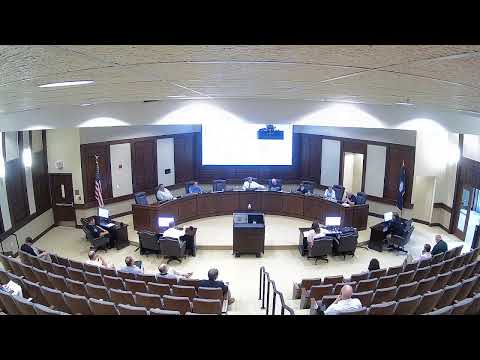
City staff preview engineering contracts for Georgia Avenue traffic calming and Crestview-Woodlawn drainage

5383722 ยท July 15, 2025

Loading...

AI-Generated Content: All content on this page was generated by AI to highlight key points from the meeting. For complete details and context, we recommend watching the full video. so we can fix them.

Summary

City staff described two resolutions that will authorize design-phase engineering contracts: a Phase 1 Georgia Avenue traffic calming project funded with CPST4 and a Crestview-Woodlawn drainage improvement design contract with Thomas & Hutton estimated at approximately $60,000. No council vote was recorded during the study session.

City staff told the North Augusta City Council study session they plan to request council approval of two professional engineering service contracts at upcoming meetings: one for Phase 1 of traffic calming on Georgia Avenue and another for design of drainage improvements in the Crestview-Woodlawn area.

Dr. Jay McCauley, assistant city administrator, said the traffic calming Phase 1 concept already has council approval and the city issued an RFQ; consulting work from Ken(n)y Horn (consultant identified in the materials) will cover planning-phase tasks. McCauley said the resolution (No. 2025-24) will attach a scope listing surveying, design services, public engagement, SCDOT coordination and permitting, bid-phase services, construction administration and project management, and that the funding source for the design work is CPST4.

Tom Zeeser, director of public works, summarized the Crestview-Woodlawn drainage project and a proposed design contract with engineering firm Thomas & Hutton. He said the drainage issue has been on the city's high-priority project list for decades and that the Thomas & Hutton proposal would perform design-related services for approximately $60,000. "This resolution will authorize funding for that," Zeeser said, and he added that a future resolution will be required to authorize construction once design is complete.

Public engagement and timing: Zeeser said the design process will likely include at least one informal public information meeting so residents can "view the design and get a better understanding of how the construction will impact their properties." When a council member asked for a time frame, Zeeser estimated the design period could be "somewhere between 60 days and 6 months," and clarified he did not have the proposal timeline in front of him.

Next steps: Jim Clifford, the city administrator, said both resolutions will appear in the council packet for upcoming meetings and that councilors may skip the ordinance pages for the current week because administration will post a 30-day public notice (in a separate matter the administrator described earlier). No formal council vote on either resolution was recorded during the study session; staff presented the scope, estimated costs, and outreach plans for council review ahead of an action item at a future meeting.

Ending: Staff asked council members for questions and said they will bring the resolutions forward for council consideration after public-notice requirements and final legal review are complete.