Get Full Government Meeting Transcripts, Videos, & Alerts Forever!
Get email alerts on the Data Centers topic
No spam. Unsubscribe anytime.
Residents urge Stafford supervisors to tighten data-center rules, oppose grandfathering
Summary
Dozens of Stafford County residents told the Board of Supervisors on July 1 that the county should strengthen data-center performance standards, avoid grandfathering pending applications and protect schools, wells and wildlife from noise, water and land-use impacts.
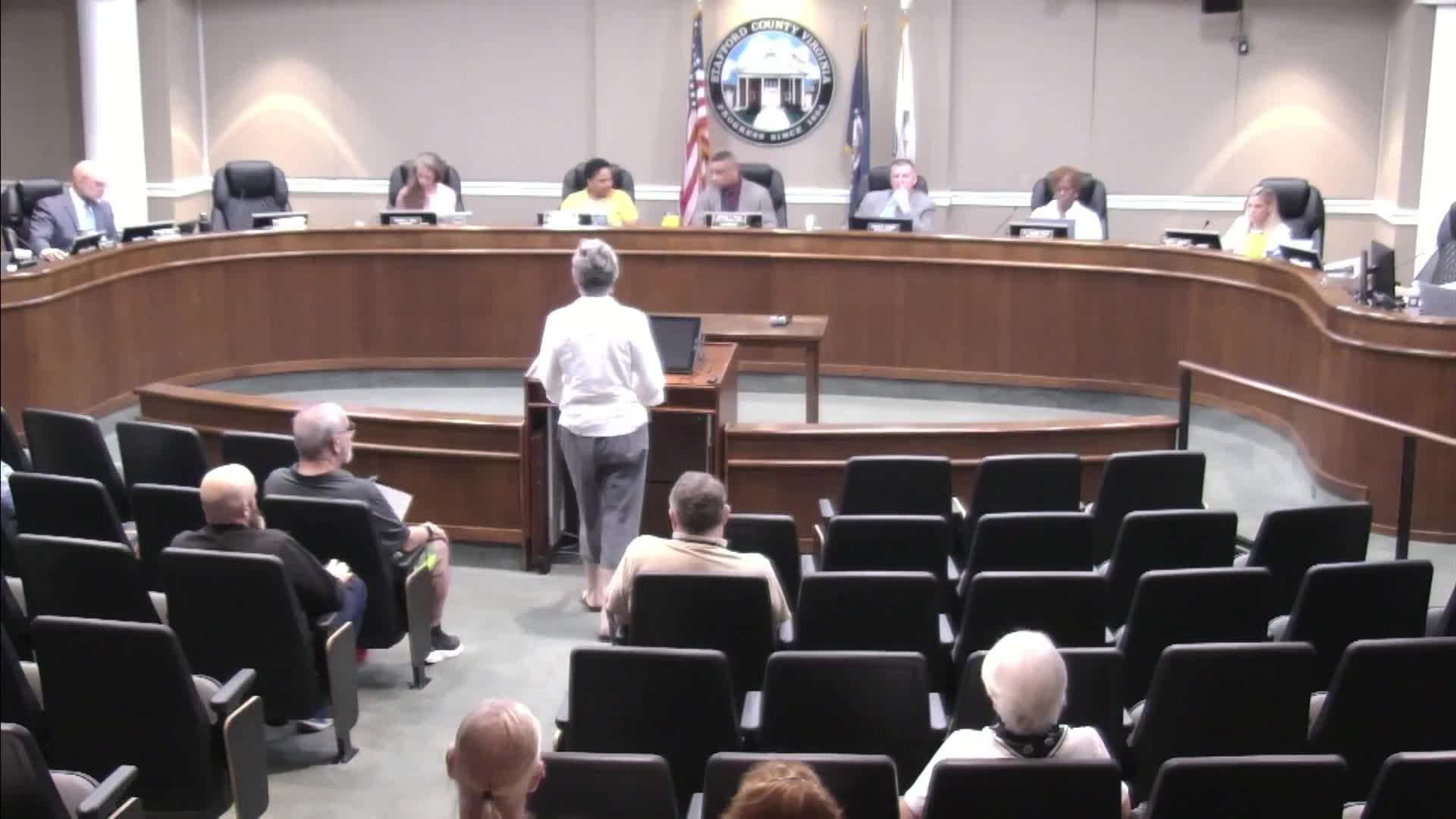
Dozens of residents told the Stafford County Board of Supervisors on July 1 that the county must tighten rules for data-center development and refuse to grandfather applications pending under older standards.
The comments came during the public-comment period at the board's regular meeting as residents from several districts raised concerns about low-frequency noise, water use, environmental impacts and property values related to proposed and approved data centers across the county.
Why it matters: Planning commissioners and a county subcommittee are preparing revised performance standards for data centers. Speakers said those changes will not protect residents if older or partially reviewed applications are allowed to proceed under previous rules.
Residents described the issue as both technical and immediate. Caitlin Coogan Miller, a Hartwood District parent, said low-frequency noise "is constant, unrelenting, and its impacts are cumulative." She asked the board to apply new standards retroactively to projects not yet approved and to require indoor post-construction testing in homes where residents report symptoms.
Other commenters urged specific policy changes already recommended by the planning commission subcommittee: a prohibition on grandfathering of unapproved applications; 1,000-foot setbacks from residences with at least a 300-foot preserved vegetative buffer; additional buffers and distance-based protections around schools and sensitive facilities; explicit protections for groundwater and surface-water resources; stronger language addressing low-frequency noise; and transparency for emissions and generator use.
Patrick Sobelik, whose remarks summarized a repeated theme, told the board: "If it's not approved yet, it should meet the new standards. Full stop." Multiple speakers cited the recent JLARC presentation and actions by other Virginia counties as precedent for stricter rules and pointed to utilities, tax and land-use analyses that they say have not demonstrated net benefit to residents.
Speakers gave local examples they said illustrated the stakes. Vicki Clark Jennings, a longtime real-estate broker, told the board she believes proximity to data centers is already depressing sales near one proposed site; she cited a listing that had reduced price after a nearby proposal became known. Connie Barrow, who compiled mapping of schools near proposed sites, said that including projects under review, 37% of Stafford County public schools and programs are within 2 miles of an approved-or-pending data center and that nine of 14 schools are within 1 mile of a project.
Several residents urged the board to prioritize health protections for children and people with special needs. Donald Squires and other commenters stressed that low-frequency noise (LFN) can travel miles and may not register on standard sound meters; they urged the board to adopt measurement and mitigation approaches that specifically address LFN.
Board and staff context: The board previously tasked the planning commission with reviewing data-center standards and held a town hall that included JLARC and Dominion representatives. Several residents thanked the subcommittee and planning staff for work done so far but asked the supervisors to resist diluting proposed standards.
What the board did at the meeting: No ordinance change was adopted on July 1. The board heard public comments and discussed the matter; later items on the agenda addressed related capital and utilities projects but did not change the county's permitting rules for data centers at this meeting.
Looking ahead: Residents asked for additional town halls, more technical studies on noise and water, and that draft code language use mandatory terms such as "shall." They told the board they will continue to press against grandfathering and rezoning of agricultural land for industrial use.