Get Full Government Meeting Transcripts, Videos, & Alerts Forever!
Get email alerts on the Procurement topic
No spam. Unsubscribe anytime.
Hampton receives availability study; staff recommends new SWAM committee and procurement changes
Summary
A consultant team and city staff outlined findings and policy recommendations Tuesday after Griffin & Strong delivered an availability study intended to measure the ready, willing and able pool of small, minority‑ and women‑owned (SWAM) firms that do business with the City of Hampton and Hampton City Schools.
A consultant team and city staff outlined findings and policy recommendations Tuesday after Griffin & Strong delivered an availability study intended to measure the ready, willing and able pool of small, minority‑ and women‑owned (SWAM) firms that do business with the City of Hampton and Hampton City Schools.
“we contracted with Griffin and Strong to conduct an availability study for the City of Hampton,” said Leonard Sledge, Chief Officer for Community and Economic Development, introducing the consultant presentation. The study covered fiscal years 2018–2022 (July 1, 2017–June 30, 2022) and examined procurement categories including construction, architecture & engineering, professional services, other services and goods.
The study used a list‑based approach that combined city and school vendor and bidders lists, formal payment records and additional local government lists in the Hampton Roads metropolitan statistical area (MSA). Griffin & Strong reported availability findings by race, gender and firm size. Among figures presented, MWBE availability within the construction category was 8.21% and the A&E category 8.17%; small‑business availability was highest in A&E at about 17.18% and construction at about 14.27%. The consultants cautioned that procurement categories are industry‑wide (for example, “construction” includes plumbers and electricians), not project‑specific capacities.
The presentation also summarized policy and administrative observations from a review of city and school procurement procedures. Griffin & Strong and staff identified potential participation barriers including contract sizing, bonding and insurance requirements; they noted that the city and schools do not retain subcontractor data and collected some subcontractor information via prime‑vendor questionnaires.
City procurement staff provided a separate five‑ to seven‑year summary of formal solicitations and responsive bidders. Lynn Whitley, director of the Office of Consolidated Procurement, said SWAM‑certified businesses accounted for more than half of formal solicitation responses in each year of the period shown and described how the city’s quote thresholds and SWAM requirements compare with nearby localities.
“We have to award to the lowest bidder,” Whitley said, noting legal limits on bypassing low responsive bids. She described Hampton’s current purchase thresholds (for example, purchases under $5,000 require two quotes, one of which must be from a woman‑ or minority‑owned vendor) and compared those thresholds to Newport News, Chesapeake, Norfolk and Virginia Beach, which use different approaches.
City attorney’s office staff described statutory options under Virginia law for local procurement programs. Ben Nadorf of the city attorney’s office summarized code provisions allowing localities to establish written procurement programs to facilitate participation by small, women, minority, service‑disabled veteran‑owned and disabled employment service organizations and to enact micro‑business or sheltered bidding programs if a rational basis or disparity analysis supports them.
Based on the study and internal staff review, the administration recommended several near‑term actions: sunset the long‑standing Purchasing and Procurement Oversight Committee (PPOC) and create a seven‑member SWAM business advisory committee (with at least five SWAM‑certified business owners); form an internal/external working group to review SWAM‑related procurement policies; broaden the city’s local procurement language to include veteran‑ and disabled‑owned businesses (moving from a minority/women only focus to full SWAM); and realign existing staff resources between Economic Development and Procurement to create a dedicated small‑business development specialist in Procurement while retaining the department’s existing small‑business staff. Staff described the recommended staffing change as budget‑neutral.
Council members asked clarifying questions about definitions, whether the availability study measured certified SWAM firms or broader MBEs, and how the city’s quote rules operate when a SWAM business cannot be located. Vice Mayor Brown and others emphasized notification and outreach to ensure SWAM firms receive solicitation notices; staff said firms are notified through the state’s Electronic Virginia (eVA) procurement portal and the city’s standing bidders list. Councilwoman Muggler urged deference to the Hampton Commission on the Arts on a later item; Councilman Bowman and others welcomed including veteran and disabled‑owned businesses in outreach.
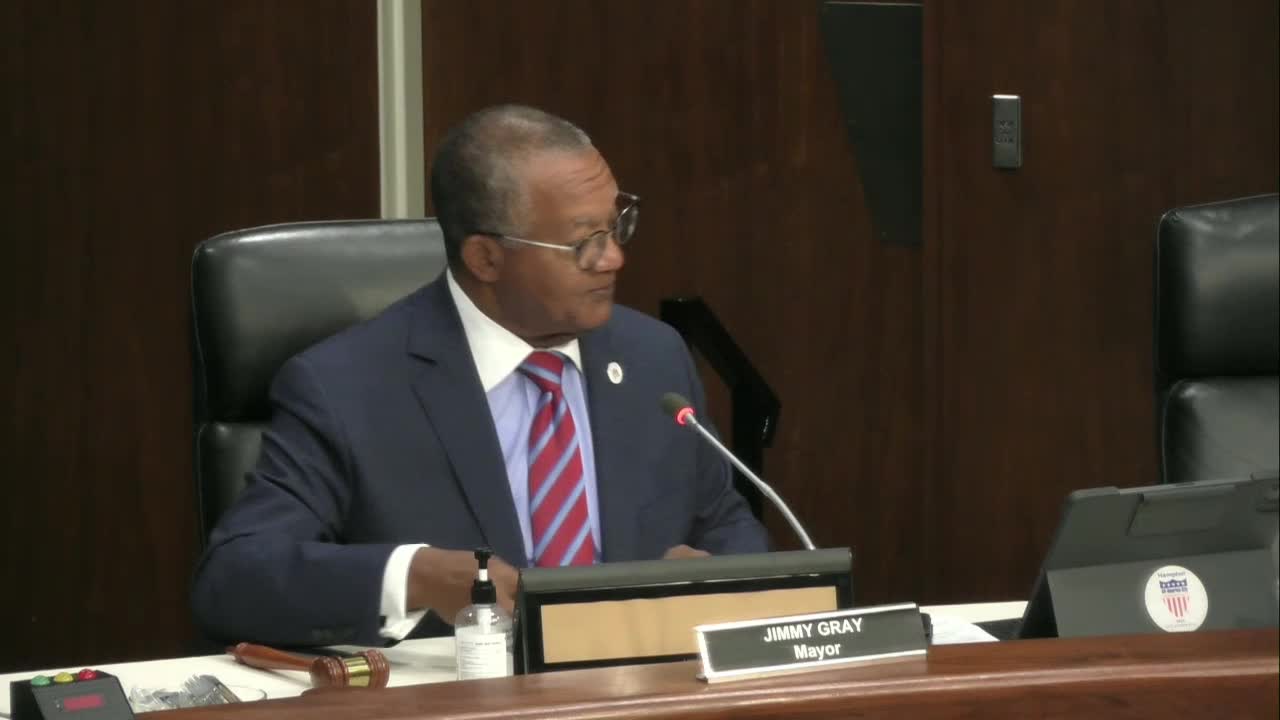
Mayor Gray asked whether staff should proceed with implementation planning; with no council members objecting, staff said they would begin work on the committee structure, policy review and staffing realignment and return with details.
Council did not take a formal recorded vote during the work session. Instead, staff stated the proposed changes and—after discussion—that lack of objection would be treated as concurrence for staff to begin drafting the ordinance and implementation steps.
The report and recommendations are intended to inform future ordinance changes, outreach and sheltered‑bidding or micro‑business programs that staff said would require additional legal review or formal council action before becoming binding policy.