Get Full Government Meeting Transcripts, Videos, & Alerts Forever!
Get email alerts on the Municipal Law topic
No spam. Unsubscribe anytime.
San Ramon city attorney reviews Brown Act rules for commissioners, warns against serial meetings and social-media exchanges
Summary
City Attorney Martin Licence reviewed the Ralph M. Brown Act at the July 1 planning commission meeting, stressing that serial communications among a quorum, reply‑all email threads and social‑media interactions about commission business can create unlawful meetings, potential disqualification and litigation risk.
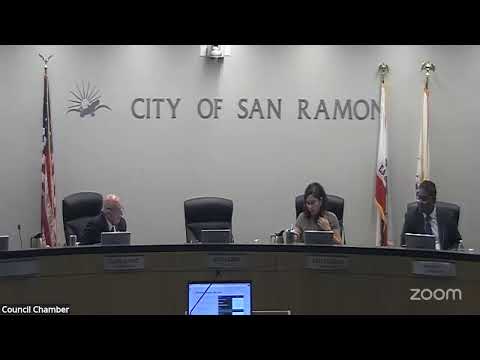
SAN RAMON, Calif. — City Attorney Martin Licence gave a Brown Act refresher to the San Ramon Planning Commission on July 1, summarizing the basic rules for public meetings and warning that modern communications channels — email chains and social media — can create unlawful “serial meetings.”
Licence said the Brown Act’s basic purpose is to ensure that actions and deliberations by local boards occur openly. “It is the intent of the law that the actions of public commissions, boards, and councils be taken openly and that their deliberations be conducted openly,” he said. He defined a meeting as any gathering where a quorum is present and commission business is discussed, even if no formal action is taken.
Licence described common pitfalls: multiple two‑party conversations that form a quorum over time (a “daisy chain” or serial meeting), reply‑all email threads that become back‑and‑forth discussions, and social‑media interactions in which likes or comments can be treated as participatory communications if they relate to commission business. “Serial meetings are considered meetings under the Brown Act and are therefore not allowed,” he said.
Licence also cautioned that public statements by a commissioner that they will vote a certain way before a hearing can create a due‑process issue and require recusal. He cited examples of jurisdictions that drew admonishments or court scrutiny for apparent Brown Act violations, and said that in one case the city spent hundreds of thousands of dollars defending a legal challenge.
Commissioners asked practical questions. Licence said they may talk about past decisions with members of the public, but advised caution: if a past approval is still subject to further permits or re-approvals, public remarks could be misconstrued as prejudging a pending matter. He urged commissioners to avoid “reply all” when staff sends an all‑commission email and to refrain from using social media to initiate or carry on discussions about upcoming commission business.
When asked whether commissioners could ask members of their community for opinions on pending matters, Licence said receiving communications from the public directed only to an individual commissioner is permissible; the risk rises if the commissioner initiates a broad, public online discussion about an upcoming agenda item. Licence also explained that most unilateral written communications from staff to the commission are public records and therefore subject to disclosure.
He summarized the penalties for intentional Brown Act violations and cited practical consequences: criminal misdemeanor liability requires intent to deprive the public of information (rare in his experience), decisions can be voided and litigation can be expensive to defend.
The presentation closed with a short overview of Robert’s Rules of Order as they apply in hearings, and a reminder that the chair controls recognition to keep meetings orderly and to ensure public participation on each agenda item. The commission asked follow‑up questions, and the city attorney offered to make himself available for additional private consultations.