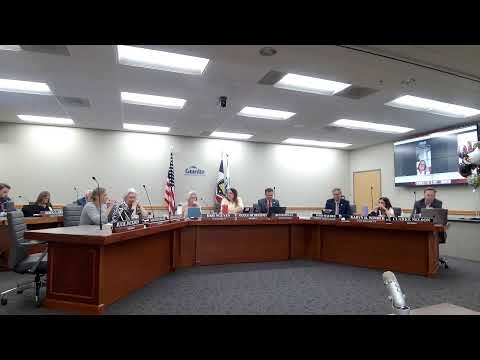
Board hears strategic-plan update as trustees debate attendance goals and supports
Loading...
Summary
Superintendent and staff presented the district's strategic-plan measures, progress on graduation and proficiency goals, PBIS sustainability and attendance concerns. Trustees pressed for legislative help, data stratification and alternatives to lowering attendance goals.
Superintendent staff updated the Granite School Board on the district's strategic plan, offering a review of academic priorities, social skills and dispositions measures and talent-development indicators, and prompting an extended discussion among trustees about chronic absenteeism and possible legislative solutions.
Staff said data available now show promising trends for graduation rates and certain high-school outcomes, while math and English language arts proficiency figures for the most recent year will not be final until December and publicly available in January. "We don't have ELA or math data, until the end of, probably more likely until January," a district staff presenter said. Staff highlighted growth in student speaking scores and said several high schools' local tactics, such as setting individual goals, had shown measurable gains.
Attendance emerged as the most contested topic. Staff described district attendance rates as a continuing challenge: "By the end of the school year, we're at 55% [with 90% or better attendance]," one presenter said, and some schools see chronic absenteeism rates of roughly 30% in specific locations. The district reported 74% of schools at a PBIS (Positive Behavioral Interventions and Supports) sustainability score of 70 or above in one year, rising to 85% the next year.
Trustees debated whether to keep the goal of 90% student attendance or to reconsider the metric and the district's strategies for improving attendance. Board Member Julie said she did not want to lower the bar for attendance, while other trustees urged exploring legislative changes and practical alternatives such as improving tier-1 instruction, home visits and family engagement. One trustee noted the juvenile justice reforms had already limited the court system's ability to act on truancy referrals, and staff said courts previously were uncertain how to handle referrals despite statutory allowance.
Finance staff explained the funding link: average daily membership (ADM) is calculated from daily attendance and influences state funding. "They go back and look at the school year to see what was our attendance like; that is converted into an average daily membership," Todd, a district staff member, said. Board members emphasized the academic impact of students missing instruction. "It's hard for our educators to do their job if kids aren't in seats," a board member said.
Trustees asked for more detailed reporting and data stratification. A board member requested future slides stratified by school level (elementary/secondary) and focused debriefs at the Student Achievement Leadership Team (SALT) meetings to analyze what specific strategies worked where. Staff said SALT and a new Boost schools program will identify schools needing additional supports and track academic return on investment (AROI) for strategic interventions.
Board members and staff also discussed the district's measures for sense of belonging, Panorama student surveys and professional-development compliance. Staff said sense-of-belonging metrics were above targets in several grades and that 99% of teachers had completed a required professional evaluation process.
No formal action on the strategic plan or attendance targets was taken at the meeting; trustees asked staff to bring more granular data and proposed legislative conversations back for follow-up.