Get Full Government Meeting Transcripts, Videos, & Alerts Forever!
Get email alerts on the Transportation Safety Fall Hill topic
No spam. Unsubscribe anytime.
VDOT outlines Fall Hill Avenue study focused on safety, bike-ped access and funding readiness
Summary
VDOT staff and consultants presented a two-year Project Pipeline study of Fall Hill Avenue in Fredericksburg, emphasizing safety, multimodal improvements and a public input process to produce concepts ready for funding applications.
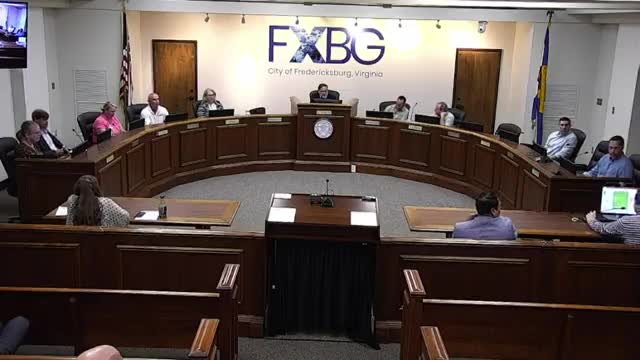
Virginia Department of Transportation (VDOT) staff and consultants presented a Project Pipeline study of Fall Hill Avenue to the Fredericksburg Planning Commission on the study’s goals, methodology and next steps.
Jeanie Alexander, a consultant with EPR working on the VDOT study, told the commission the study covers Fall Hill Avenue from Mary Washington Boulevard to Washington Avenue and focuses on safety, bicycle and pedestrian facilities and transit improvements. “The intent is to streamline the process and come up with solutions that are ready to be funded,” Alexander said.
The Project Pipeline process follows statewide planning priorities in VTrans, Alexander said, and runs on a roughly two-year cycle. The team is completing phase 1 — existing-conditions analysis, public input and safety review — and plans to wrap phase 1 by July so that concept brainstorming can begin in phase 2. Alexander said the project team expects to present public concepts and solicit input before Thanksgiving and will prepare funding-ready materials in phase 3 for applications due in August of the odd year cycle.
VDOT staff described the study area as extending the entire Fall Hill Avenue corridor within the city and noted that most of the corridor was flagged as having potential for safety improvements. Alexander summarized crash data for a five-year period and said the corridor’s crash patterns concentrate at intersections; there was one fatal crash reported in the period reviewed, and most crashes were property-damage-only. Pedestrian and bicycle crash counts in the data set were low (one bicycle crash and no pedestrian crashes reported in the study period), but the study team emphasized field observations and pedestrian activity in and near the corridor as important inputs that do not always appear in vehicle-focused datasets.
Commissioners and Pathways Committee members raised local concerns during the question-and-answer portion. Vice Chair Carrie Whitehead and Commissioner Mary Margaret Marshall pressed the team on the time windows and extent of traffic and pedestrian counts; Alexander said camera-based intersection counts were recorded in April for 12 hours (7 a.m.–7 p.m.) and that field observations also occurred during peak periods. Pathways Committee members and residents who use the corridor asked the team to prioritize safer crossing locations, reduce crossing distances where feasible and consider sight-distance issues; the study team said it would evaluate crossings as part of concept development.
The study team also said it is coordinating with existing work on Route 1 and recent local studies (including a one-way conversion study) so concepts for Fall Hill can tie into nearby projects where appropriate. Alexander said the study is purposely multimodal and includes VDOT design staff so proposed concepts are implementable rather than purely conceptual.
Next steps listed by VDOT and the consultant include wrapping phase 1’s analysis by July, preparing concept alternatives and presenting those alternatives to the public in phase 2 for feedback prior to selecting a preferred alternative in phase 3 and preparing funding application materials.