Get Full Government Meeting Transcripts, Videos, & Alerts Forever!
Get email alerts on the Housing Grants topic
No spam. Unsubscribe anytime.
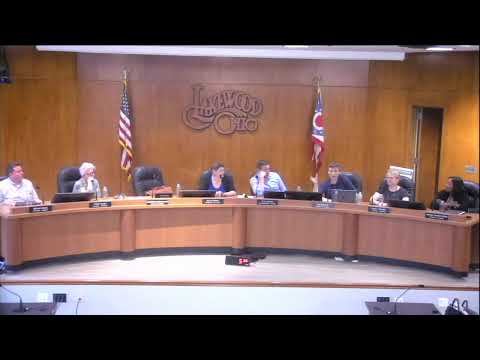
Lakewood committee forwards HUD consolidated plan to council after overview of five-year strategy
Summary
The Housing Planning Development Committee voted to refer the city's HUD consolidated plan and FY2025 annual action plan to full council after staff and a consultant summarized the plan's goals, data sources and public comment schedule.
The Housing Planning Development Committee voted to refer Lakewood's five-year HUD consolidated plan and the city's FY2025 annual action plan to full council, moving the documents into a 30-day public comment period ahead of the city's July public hearing and a July 15 submission deadline to the U.S. Department of Housing and Urban Development (HUD).
The plans set the city's approach to spending federal Community Development Block Grant (CDBG), Emergency Solutions Grant (ESG) and HOME funds from HUD for 2025'29. "As a condition to receiving federal funds for CDBG, ESG, and HOME, the city has to submit a plan to HUD every 5 years," Development Officer Daniel Wyman told the committee, summarizing the federal requirement and the consortium process Lakewood used with Cuyahoga County.
The plan, prepared with technical work by HP Group, lays out a needs assessment, housing market analysis and priority goals that include preserving and expanding affordable housing, revitalizing residential neighborhoods, providing public services and increasing economic opportunity. "The 5 year plan is a planning document to describe the housing needs of low and moderate income residents, outline the goals to meet those needs, and discuss the funding that's available," Rick Cica, a consultant with HP Group, said while reviewing the report's structure and HUD's data sources.
Committee members asked about eligibility maps, how HUD defines low- and moderate-income populations, and the mechanics of spending CDBG funds on area-wide activities such as park and street projects. Wyman and the consultant explained that HUD's low/moderate-income (LMI) data come from five-year American Community Survey (ACS) estimates and that HUD produces mapping tools to identify eligible census tracts. CDBG-funded area projects (for example, certain park or street resurfacing projects) are tied to those census-tract maps; housing assistance is targeted to households that meet HUD's income tests.
Committee members also pressed staff on public engagement and amendment procedures. Wyman said the plan is on the city website and that comments will be accepted through July 11 for inclusion in the final document; Lakewood's public hearing was scheduled for July 2. He noted that substantive program changes in future years generally are handled through the annual action-plan amendment process and that HUD performs routine monitoring of annual performance reports.
After questions, a motion was made to forward the consolidated plan and FY2025 annual action plan to full council for approval and submission to HUD; the committee approved the referral by voice vote and will transmit the plan for the full council's consideration and the public comment period. The committee and staff said they will continue to work with HUD during the agency's 45-day review window if HUD requests clarifications.
The plan and instructions for submitting public comments are posted on the city calendar and planning department web pages, and staff said copies are available at the planning office for residents who prefer paper copies.
What happens next: the committee's favorable referral moves the consolidated plan to full council. If council approves it before the close of public comment, staff will still include any comments submitted before the city's final file date in the packet transmitted to HUD.