Get Full Government Meeting Transcripts, Videos, & Alerts Forever!
Get email alerts on the Property Tax Homestead Exemption topic
No spam. Unsubscribe anytime.
Tiverton council asks assessor for scenarios after lengthy homestead-exemption discussion
Summary
Councilors discussed options for a homestead exemption, tax classification and senior exemptions at the June 23 meeting and asked town staff to return with modeled scenarios and numbers.
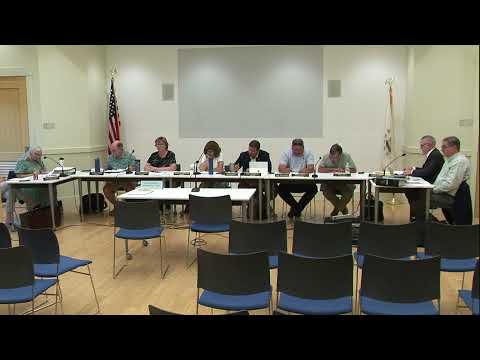
Tiverton — The Tiverton Town Council on June 23 held an extended discussion about adopting a homestead exemption and other property-tax relief options, directing the town assessor to prepare scenarios for the council to review.
Councilor Perry, who prompted the agenda item with another council member, said he had spoken with the assessor and asked the town to run numbers for different exemption levels. "We looked at some of the numbers and how it would affect certain households," he said, describing possible 10% or 15% homestead exemptions as starting points.
David Roberts, the town assessor, explained two separate policy tools the council could use: tax classification (which allows different tax rates for property classes such as mobile homes) and a homestead exemption (a reduction in assessed value for qualifying owner‑occupied properties). Roberts cautioned that a homestead program shifts tax burden to nonqualifying properties because Tiverton’s commercial tax base is small. "If you had a 10% homestead exemption on eligible properties, the typical homeowner would save roughly a $140. The non eligible, their tax risk would increase $530," Roberts said.
Councilors discussed targeting relief. Councilor Burke said mobile‑home parks bore a disproportionate share of increases in the recent revaluation; other councilors urged care in choosing eligibility rules because some mobile homes have higher sale prices. Councilor Perry proposed tiered senior exemptions tied to age ranges (for example, 5% at ages 65–70, 10% at 70–75 and higher for older cohorts); several councilors said senior exemptions should consider income eligibility and not simply be across-the-board.
No vote was taken. The council asked the assessor to provide concrete scenarios — combinations of homestead percentage, tax-class options and senior-exemption structures — so members can review likely fiscal impacts and distributional effects. The administrator and assessor said they would return with modeled numbers and that state enabling legislation would be needed for some changes; council members were told the enabling legislation could be reintroduced at the next session if the previous companion bills did not align.
Ending: The council asked staff to prepare multiple modeled scenarios for a future meeting so members would have concrete numbers before deciding whether to pursue local action or state enabling legislation.