Get Full Government Meeting Transcripts, Videos, & Alerts Forever!
Get email alerts on the Wildfire Funding topic
No spam. Unsubscribe anytime.
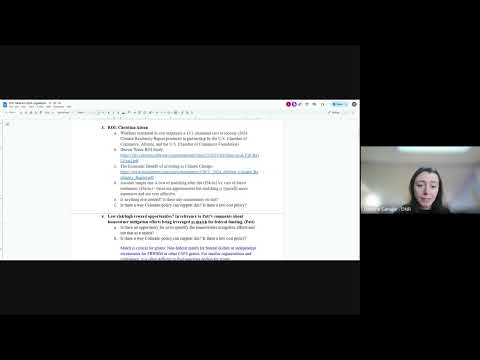
Panel: Wildfire Ready Watersheds has sustainable funding, council told; state budget constraints limit new spending
Summary
Colorado Forest Health Council members heard that Wildfire Ready Watersheds and the Colorado Water Plan grant provide sustainable funding, but state budget shortfalls make new general-fund investments unlikely in the near term.
At a Dec. 13 meeting of the Colorado Forest Health Council’s legislative committee, members were told that the Wildfire Ready Watersheds program receives sustainable funding through the Colorado Water Plan grant and that the program does not currently need additional state funding.
The council discussed whether state policy could create low-cost opportunities to support forest implementation work while officials await results of broader biomass and county studies expected in 2025.
“Allison Arch said she had contacted Chris Sturm at the Colorado Water Conservation Board and relayed that ‘the program has sustainable funding and does not need additional funding,’” Chair Larimer County Commissioner Jody Shab McNally said, reading Arch’s report to the group. Council members noted links between Wildfire Ready Watersheds and the Colorado Watershed Restoration Program and said the two efforts have partnered to direct forest implementation funding to areas preparing Wildfire Ready Watersheds action plans.
A council staff member who identified herself as Daphne cautioned that state budget constraints would limit the ability to stand up new programs. “With a $1,000,000,000 deficit in the budget this year, there just is absolutely no spare cash or no spare dollars, to, I think, stand up new programs or even expand existing ones,” Daphne said. She advised that presentations and data that build the case for investment are appropriate but that actual new general-fund appropriations are unlikely without TABOR-exempt cash funds or other dedicated sources.
Members discussed using existing forums to keep the message about return on investment alive for new legislators and committees of reference. Daphne said targeted distribution of the council’s annual report to legislators serving on relevant committees — for example, the wildfire matters review committee or agriculture, water and natural resources committees — could be an efficient way to reach policymakers. She also noted that the state’s Smart Act presentations in January offer an opportunity for state agencies to brief committees of reference and that the state forest service might appear in the DNR Smart Act slot.
Council members agreed on continued outreach and message-building rather than immediate requests for new general-fund dollars. Several members urged continued partnership and coordination between CoSWAP (Colorado Statewide Forest Action Plan-related work) and Wildfire Ready Watersheds to leverage existing funds and programs.