Get Full Government Meeting Transcripts, Videos, & Alerts Forever!
Get email alerts on the Municipal Finance topic
No spam. Unsubscribe anytime.
CFO: bond passage shifts $82 million to debt; town must balance maintenance and operations
Summary
Flower Mound CFO John Zegerski told the CDC the recently passed bond will move about $82 million of park work to debt, but operational costs are rising and SB 2 limits revenue growth to 3.5% annually — meaning a future voter-approved revenue election may be required to sustain services.
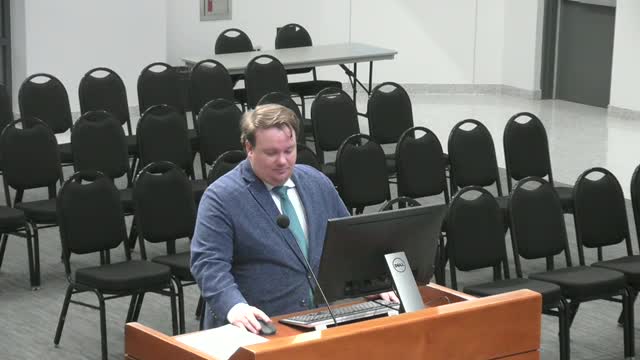
Flower Mound Chief Financial Officer John Zegerski told the Community Development Corporation Tuesday that the town’s recently approved bond package shifts a large share of park capital to debt while the town faces rising maintenance and operating costs.
"With the passing of the bond program, we are shifting — I mean, for parks in particular, we shifted $82,000,000 to debt, that can be funded over the next five years without increasing the tax rates," Zegerski said. He said the move allows construction of projects without immediately raising rates but that the town must also address ongoing maintenance, staffing and contract costs.
Zegerski described a set of fiscal constraints facing the town, noting the 2019 state law commonly called SB 2 "limits our primary revenue source ... to 3 and a half percent growth a year in revenue." He said that cap, combined with flat sales-tax receipts and steady inflation in service costs, will force the town to consider other revenue measures in the coming years.
"This is why you’re seeing us look at increases [in] charges for service," Zegerski said, pointing to user fees and EMS fees as examples. He also described efforts to grow the commercial and sales-tax base — citing potential retail such as grocery stores and a Costco — and noted that some commercial development, such as warehouse space, produces sales and property-tax revenue while generating relatively few calls for emergency services.
On longer-term options, Zegerski outlined a voter-approved tax revenue election (sometimes called a Voter-Approval Tax Rate or "VADER" election in the presentation) as the principal mechanism to raise recurring revenue beyond the SB 2 cap. He explained that such an election can be framed as allowing the tax rate to decrease less than it otherwise would as property values rise, a technical distinction that nevertheless is presented to voters as a revenue increase once beyond the 3.5% cap.
Zegerski said the town is pursuing multiple steps to reduce reliance on property taxes, including conservative revenue forecasting, pursuing grants and sponsorships, adjusting fees, and seeking to expand the sales-tax base with new commercial development. He emphasized that staff preference is to avoid immediate property-tax increases: "Property tax is the least lever that I ever want to increase," he said.
Board members asked questions about timing and whether the O&M increases included in the current budgets are expected to recur; staff said the $2,000,000 O&M allocation for parks is intended as an ongoing commitment to maintenance, contracted services and utilities supporting expanded park assets. Zegerski said that if sales-tax and other revenue sources flatten or decline, staff may recommend capital freezes or hiring freezes as contingency steps.
Zegerski’s presentation framed the bond passage as enabling capital expansion while underscoring the trade-offs between debt-financed capital and recurring operational costs.