Get Full Government Meeting Transcripts, Videos, & Alerts Forever!
Get email alerts on the Goshen Ev Battery Project topic
No spam. Unsubscribe anytime.
Subcommittee hears questions about failed Goshen EV battery project and $23.7 million in site-readiness funds
Summary
Witnesses and lawmakers described community opposition, limited local engagement, and unanswered questions about $23.7 million paid from the Strategic Site Readiness Program to The Right Place for the proposed Goshen EV battery plant; representatives urged recoupment and transparency.
Testimony and lawmaker statements during the House Oversight Subcommittee on Corporate Subsidies and State Investments hearing on Oct. 30, 2025, focused on the failed Goshen electric vehicle battery project, the timing and use of state site-readiness funds, and impacts on local governments near Big Rapids.
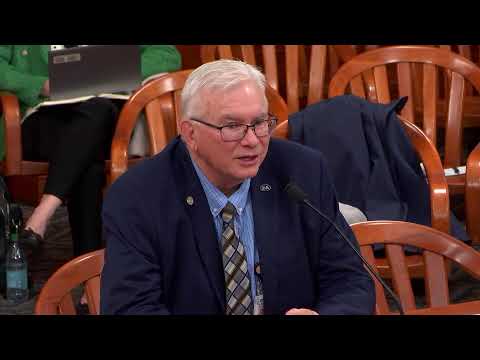
John Mazzina, president of the Center for Economic Accountability, said he first engaged with the Goshen project in October 2022 and described persistent transparency and community engagement problems. "There seemed to be, a severe lack of transparency and engagement, with local residents, and even, with local elected officials," he told the committee.
Mazzina said state funding routes for the project included a total package he described as $175,000,000, of which $125,000,000 was Community Infrastructure Program (CIP) funding "which was never appropriated to Goshen," and $50,000,000 from a Strategic Site Readiness Program (SSRP). He said $23,700,000 of SSRP funds had been disbursed from the MEDC to The Right Place. "What they spent all that money on, I don't know," he said, adding that some activity on the site included tree removal but no significant buildings or infrastructure visible to the public.
Rep. Tom Koons, whose district includes Green Township near Big Rapids, raised lien and legal-fee concerns on the property. Koons said the project site carried a lien of roughly $24,600,000 on a property he characterized as valued at about $6,000,000 and that the state is in second position on the lien. He told the committee he had submitted a legislative spending request of $275,000 to help the township with legal fees; that request did not pass the budget process.
Local residents and township officials also complained to the subcommittee that environmental diligence was incomplete: Mazzina said a local resident, Marjorie Steele, discovered that no environmental impact report had been prepared before the deal was signed and announced. Committee members and witnesses said that local officials and residents felt sidelined during negotiations.
Mazzina told the subcommittee the Michigan Economic Development Corporation is seeking repayment of $23,600,000 in SSRP funding sent to The Right Place. He recommended that state programs avoid dispersing funds before all approvals are complete. "It would have been better not to disperse any of that funding before all the approvals were finalized," he said.
The hearing also covered broader policy tools used to attract projects, including renaissance zones and tax exemptions. Mazzina criticized those tools as concentrating incentives in a single geography while diminishing investment elsewhere. "These zones...are a sort of rob Peter to pay Paul mechanism," he said.
Several members of the Legislature who spoke at the hearing recounted local organizing against the project and urged follow-up: Rep. Joe Fox described door-to-door interviews that found strong local opposition; Rep. Koons asked the committee to pursue answers about where state funds were spent and what could be done to recoup costs.
The committee did not vote on restitution or changes to grant procedures at the hearing, but members signaled interest in pursuing repayment and in changes to the timing and oversight of site-readiness funding.