Witness tells House subcommittee governor—s overseas trips and donor ties raise transparency concerns
Loading...
Summary
John Mazzina, president of the Center for Economic Accountability, told the House Oversight Subcommittee that Michigan—s economic development travel and the Michigan Economic Development Foundation—s donor ties raise oversight and conflict-of-interest concerns, citing reporting and subsidy-tracker data.
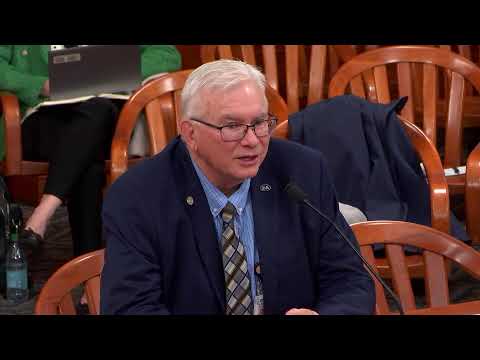
John Mazzina, president of the Center for Economic Accountability, told the House Oversight Subcommittee on Corporate Subsidies and State Investments on Oct. 30, 2025, that Michigan—s governor-led overseas trade trips and the donor relationships of the Michigan Economic Development Foundation (MEDF) reveal weaknesses in oversight of state economic development spending.
Mazzina said the lack of independent enforcement leaves the Michigan Economic Development Corporation (MEDC) and related entities with limited external checks. "We're sure as heck not getting meaningful oversight of the MEDC from anyone else," he told the committee.
His testimony cited recent reporting in the Detroit News and data from the Good Jobs First subsidy tracker. "According to its IRS filings, the Michigan Economic Development Foundation's mission is, quote, to lessen the burden of the government of the state of Michigan to promote the public welfare," Mazzina said. He told lawmakers that, based on publicly available records, "of the 29 companies the foundation lists as supporters, 20 of them had some form of tax abatement, grant, or other subsidy from Michigan listed in the subsidy tracker database maintained by Good Jobs First." He added that the Detroit News reporting showed foundation board companies had received about $2,200,000,000 in subsidies under this administration.
Mazzina told members that corporate site selectors value many factors above government responsiveness when choosing locations for investment, citing an industry survey. "State and local responsiveness comes in sixth," he said, but factors such as labor costs, quality of life and energy availability rank higher; incentives rank much lower on the list.
Committee members asked whether overseas trips focus on pitching Michigan's qualities or on offering subsidies. "I suspect that the governor is probably leading with...everything that's wonderful about Michigan," Mazzina replied, but added that "if it isn't the governor herself talking about subsidies, that someone else on that trip, whether from the MEDC or otherwise, is certainly having that conversation pretty quickly."
Mazzina also addressed the MEDF's nonprofit status and donor disclosure. He said his organization protects donor privacy but urged greater transparency from quasi-public nonprofit actors whose activities intersect with official trade and subsidy processes. "For an organization that is taking this sort of almost quasi-governmental role...ethically, it would seem to be a good idea to do that," he said of donor disclosure.
On legal and enforcement questions, Mazzina said he is not an attorney but noted federal tax rules and state nonprofit laws might bear on whether some activities should be treated as lobbying or otherwise restricted. He suggested that the Legislature and oversight bodies examine how economic development entities comply with existing rules and recommended clearer, stricter oversight and public reporting of subsidies and related donor access.
The subcommittee followed Mazzina's testimony with questions from members including Vice Chair Rep. Green and Minority Vice Chair Rep. Wigela; lawmakers pressed for data linking donors to subsidies, for clearer ROI metrics on overseas travel, and for changes to distribution timing so funds are not paid before approvals are complete.
The hearing record shows committee members and the witness repeatedly urged transparency reforms, but no formal policy or vote on changes to MEDC or MEDF practices occurred during this meeting.