
Lennox superintendent recommends closing Belton Elementary; board to decide Dec. 16
Get AI-powered insights, summaries, and transcripts
Subscribe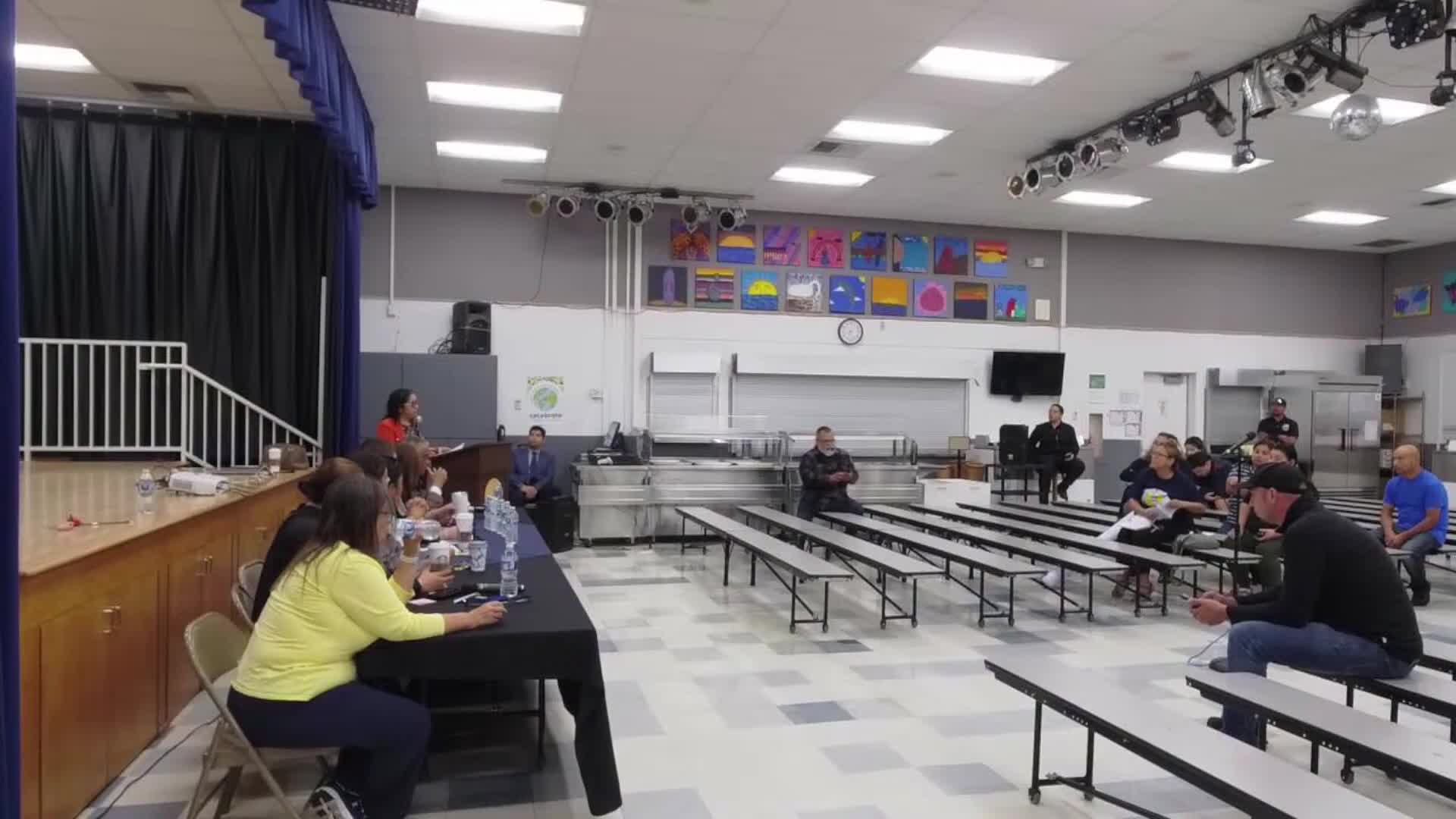
Summary
Superintendent Gabriela Tabiner told a town hall audience the district faces deep enrollment declines and recommended the board close Belton Elementary at the end of the school year; the board will make a final decision on Dec. 16 after the district collects public comment and presents additional materials.
Superintendent Gabriela Tabiner told parents, staff and community members at a Lennox School District town hall that she will recommend to the district’s Board of Trustees that Belton Elementary School be closed at the end of the 2025–26 school year. “My recommendation to the board will be to close Belton Elementary School at the end of this school year,” Tabiner said, and she described the proposal as one element of a broader plan to respond to a sustained drop in enrollment.
Tabiner and consultant Taylor of MGT Consulting described a multi-month process that produced a recommendation after reviewing demographic projections, facility assessments and budget models. “What we have is a recommendation. It’s not a final decision. No decision has been made. That final decision rests with the Board of Education,” Taylor told the meeting.
The superintendent presented district data showing a long-term enrollment decline. Tabiner said Lennox had about 3,711 students in 2025–26 and that a third-party demographic study projects further declines: by 2035 resident TK–8 enrollment could fall to about 2,009. She told the audience that two elementary campuses—Felton and Buford—have seen steep declines (Tabiner cited Felton as down about 37–38 percent and Buford about 30 percent from earlier peaks) and that closing one elementary school could yield district savings she estimated between $600,000 and $900,000.
Tabiner described the superintendent’s advisory council’s recommendation as a choice between two scenarios considered by the group—moving one school’s general-education students into the other campus (either Buford into Felton or Felton into Buford)—and said the council left the final selection for her. The presentation included facility needs information from PBK and a district financial summary showing, as presented by Tabiner, that Felton’s expenditures exceed its revenue by roughly $1.2 million while Buford’s expenditures exceed revenue by roughly $130,000.
Tabiner addressed special education services several times, saying the district plans to move from a centralized special day-class model toward a distributed continuum of services across sites. “IEPs are legally binding, and they will continue to be received in their services,” she said, adding the district will meet individually with families and their case managers if the board approves the consolidation.
Community members at the town hall raised concerns about what would happen to the closed campus, traffic and safety at receiving sites, the quality of instruction after consolidation, and the timeline for staff reassignments and potential layoffs. A number of speakers urged more detail on how specialized programs and services for students with disabilities will be maintained. One commenter noted state and federal obligations for students with disabilities and asked for a special-education impact analysis to be published before a final vote.
Tabiner described next procedural steps the district will take: collecting public comment from the town hall sessions to include in materials to the board, presenting additional information to trustees on Nov. 7, and asking the Board of Trustees to make a final decision on Dec. 16. If the board approves the consolidation, Tabiner said the district staff would begin transition work immediately to prepare for a new school year that she referenced as starting in mid-August 2026. She repeatedly emphasized that the recommendation is intended to preserve district programs and staffing over the long term in the face of declining enrollment.
Public comment at the town hall was largely opposed to closures or asked for stronger assurances about program continuity and land use for any vacated campus. Several speakers asked who would appoint a 7‑to‑11 community committee that state rules require if the district decides to dispose of a property for non-educational uses; district staff replied that the board would appoint that committee if and when the board determines the property is not needed for an educational purpose.
The board has not yet acted. Tabiner framed the recommendation as one measure among several the district will use to try to stabilize its finances while maintaining services for students. The district posted materials, meeting minutes and a FAQs document on its website and said it will expand the FAQs as questions arise.