Get AI Briefings, Transcripts & Alerts on Local & National Government Meetings — Forever.
Neera Tanden tells Oversight Committee she followed White House autopen and decision-memo protocols, says Biden ‘was in charge’
Loading...
Summary
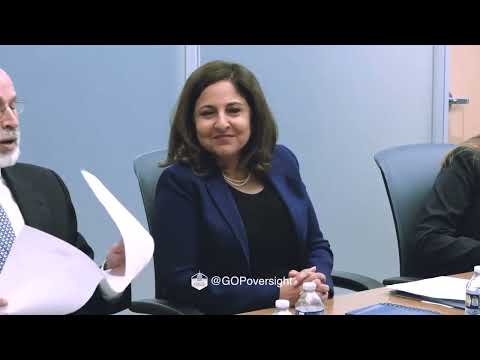
Neera Tanden, who served as senior adviser, staff secretary and director of the Domestic Policy Council in the Biden White House, told the House Oversight Committee she oversaw the White House decision‑memo process that led to presidential signatures and that the autopen used to affix the president’s signature was operated by the clerk’s office under established protocol.
Neera Tanden, who served in the Biden White House as senior adviser, staff secretary and director of the Domestic Policy Council, told the House Committee on Oversight and Government Reform during a transcribed interview that she oversaw the assembly and review of decision memos and decision cards that the president signed or initialed and that the autopen was applied by the White House clerk’s office under a long‑standing protocol.
Tanden described the staff‑secretary role as responsible for collecting and editing decision memos, synthesizing them onto decision cards, and ensuring the president’s signed or initialed decisions were recorded. "He was in charge," she said of President Biden when asked whether she had any reason to question who was making decisions. She told the committee that, where the president approved an action and initialed the card and the memo, that constituted the authorization she would treat as sufficient for using the autopen in ordinary, lower‑profile executive actions and correspondence.
The committee pressed Tanden about how the autopen was used and who operated it. She said David Kalbaugh, the White House clerk, and his career staff physically controlled the autopen device and that her office (and her deputy) were authorized to request use of the autopen for executive actions and correspondence under the procedures she inherited from earlier administrations. She described two broad categories that commonly used autopen: high‑volume items such as form letters and certain recurring executive actions (for example, annual continuations of national emergencies and other technical authorities), and other executive actions where the president did not want a public signing event. Tanden said major or high‑profile legislation typically involved a signing event and was not regularly autopened when the president wanted a public ceremony.
On pardons and commutations, Tanden said she recalled two groups of cases during her tenure: a set of domestic clemency actions handled through the usual pardon process and a small number of national‑security‑related actions that were coordinated with the National Security Council and, in those cases, "he specifically signed those." She said she could not recall in every instance whether an autopen was used for the domestic clemency matters and that the clerk’s office would have applied any autopen signature.
Committee members also questioned Tanden about scheduling and access inside the West Wing. She explained that the Oval Office operations and the chief of staff’s office coordinated meetings, that proximity to the Oval historically correlates with frequency of meetings, and that staff used a daily decision book to present items to the president. Tanden said staff tracked decisions and that her office maintained a tracker recording when memos and cards were received and when signed authorizations were returned.
On the 2024 presidential debate, Tanden said she did not attend the president’s immediate debate prep but provided policy materials to debate teams through Bruce Reed and others. She testified she reviewed clips and social coverage afterward and described the debate performance as "very poor" based on what she saw. She said an 08:40 senior‑staff meeting the next morning acknowledged the outcome and planned a public response; senior staff told her the president would later make public remarks.
Tanden discussed having one social meeting with CNN anchor Jake Tapper several months earlier, and she told the committee she declined to be a source for a book Tapper said he was writing about campaign decisions; she also said she had brief social contacts with other reporters but was not a source for the books at issue.
Throughout the session, Tanden emphasized she was speaking to the committee "to the best of [her] recollection" about complex, multi‑year processes. When asked directly whether she believed President Biden suffered cognitive decline, she replied, "I do not." She repeatedly separated physical signs of aging (which she acknowledged observing in the president over time) from questions about his ability to carry out presidential duties, telling the committee that, in her experience, he "was in charge" and capable of handling complex policy matters.
The transcript of the interview contains detailed procedural exchanges about exhibits, counsel identification, and ground rules. Tanden confirmed she had testified voluntarily, provided a prepared statement that the committee marked as an exhibit, and answered majority and minority questions over the course of the session.
The committee’s questioning ranged across staffing and organizational topics, media contacts, autopen and signature logistics, the decision‑memo and card process that preceded presidential authorizations, scheduling, and interactions with senior advisers and agency officials. Tanden identified several senior White House staff she worked with regularly, including Ron Klain, Bruce Reed, Steve Ricchetti and others, and said the clerk’s office (David Kalbaugh) managed autopen operations.
Tanden’s answers were offered as recollection of events; she and committee counsel repeatedly noted that many topics covered had occurred years earlier and that records and archives maintained by the White House and the clerk’s office would contain the documentary evidence for precise verification.
The transcript of the interview is part of the committee record; the committee labeled Tanden’s written statement and additional exhibits for the public record. Tanden said she had discussed the fact of her interview with a small set of personal contacts and briefly with Ron Klain but did not provide materials outside counsel before testifying. Ending the interview, she reiterated that she had no experience that would lead her to question President Biden’s command as president and that she was prepared to answer further questions "to the best of [her] recollection."