Get Full Government Meeting Transcripts, Videos, & Alerts Forever!
Get email alerts on the Roadmap2030 topic
No spam. Unsubscribe anytime.
Decatur SD 61 trustees review Roadmap 2030 planning, pause facility changes while superintendent search continues
Summary
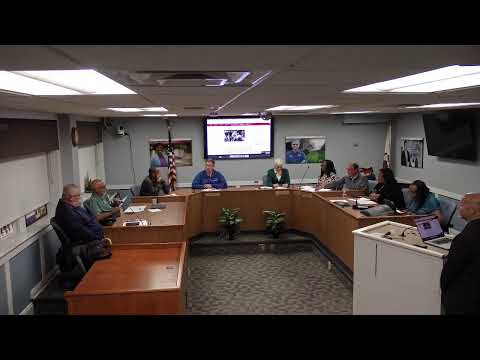
At a special open work session on Oct. 16, 2025, Decatur School District 61 trustees reviewed archived Roadmap 2030 materials and a facilities proof‑of‑concept tied to instructional strategies and debated whether to resume the planning work while the district searches for a new superintendent.
Decatur — At a special open work session on Oct. 16, 2025, the Decatur School District 61 Board of Education reviewed archived materials from the paused Roadmap 2030 strategic‑planning process, discussed scenarios that would realign grade configurations and magnet offerings, and debated whether to resume the planning work while the district conducts a search for a new superintendent.
The session opened with a public comment from Brett Robertson, who said the community still wants clarity about the long‑pending Dennis School closure: "It's now been, I looked it up, 2 years and 4 months, 2 years and 4 months since the announcement about this closure of Dennis School," Robertson said, urging more transparency and priority for the West End neighborhood and affected families.
Why this matters: Staff framed Roadmap 2030 as a package of a five‑year strategic plan, a balanced scorecard of measurable goals, and potential facility reconfigurations that would support instructional "high‑leverage" strategies such as weekly professional learning communities (PLCs), gatekeeper grade checkpoints, expanded career and technical education (CTE) pathways, and targeted literacy work. Trustees said those instructional changes, and clearer evidence of community support, should drive any decisions about school buildings.
Staff presentation and archive: Dr. Clark, the superintendent, and district staff told trustees that every piece of Roadmap 2030 work is archived on the district website and that the committee had pursued multiple community forums and stakeholder sessions. "Everything is online," Dr. Clark said, noting the March materials and recordings remain available for trustees and the public to review.
Instructional focus and facilities proof of concept: District staff described a proof‑of‑concept scenario developed before the pause that would create quadrant‑based attendance centers (preK–2, 3–5, 6–8) feeding into two high schools for the near term. Staff said they favored preserving the district's Montessori program because the building and programmatic results were distinctive, while proposing that other flagship buildings be repurposed as equitable middle schools so all students could access specialized pathways in grades 6–8. Dr. Marino, a district presenter, stressed consistency of instruction across schools: "The same curriculum is being taught in all schools," he said, and noted that some non‑magnet schools already show strong performance.
Board concerns and priorities: Trustees repeatedly emphasized fiscal constraints, teacher recruitment and retention, and the need for a data‑driven approach. Will, a trustee, warned of a budget shortfall and urged long‑term planning: "We're looking at a $5,000,000 hole," he said. Other trustees urged improvements in professional development, social‑emotional learning (PreK–12), more robust data collection and benchmark timelines, and greater equity between magnet and neighborhood schools.
Community participation and steering committee: Staff reported that roughly 57 participants had been identified for the Roadmap steering committee but attendance varied across sessions; they acknowledged that teacher participation outpaced family turnout at public forums and said they would need to recruit more families if the process restarts. Trustees said committee composition and the perceived drop in participation were important considerations before resuming work.
Timing and superintendent search: Several trustees urged caution about resuming contentious facility conversations while the superintendent search is underway, saying public conflict could discourage candidates. Mr. Wetzel, a trustee, and other board members recommended waiting until the superintendent search reaches a late stage before unpausing Roadmap work so the hiring process is not affected.
Other items: Trustees raised operational and instructional details that would accompany any plan: one‑to‑one iPads districtwide (staff said every student has an iPad), concerns about students' keyboarding skills on tablets, an upcoming ISBE conference on performance‑level changes (Nov. 6), and a welcome event for new educators tentatively scheduled for Nov. 12. Several trustees urged that any facility options be explicitly tied to the high‑leverage instructional strategies staff outlined.
Formal actions: The board approved the meeting agenda at the start of the session and later voted to adjourn; staff and trustees made no formal decisions on Roadmap 2030 or building reconfigurations during the session.
Looking ahead: Staff recommended updating Roadmap data and demographics before restarting planning. Trustees tasked themselves with reviewing archived materials, clarifying "hard‑no" issues they will not support, and discussing timing for resuming the planning process at future board meetings.