Get Full Government Meeting Transcripts, Videos, & Alerts Forever!
Get email alerts on the Pcboa Meeting Votes topic
No spam. Unsubscribe anytime.
PCBOA approves several shoreline variances, denies multiple applications including two after‑the‑fact grading cases
Summary
Hubbard County Planning Commission/Board of Adjustment approved a number of shoreline and subdivision variances with conditions, denied several where alternatives or environmental concerns existed, and required applicants to return with revised plans or meet specified deadlines where appropriate.
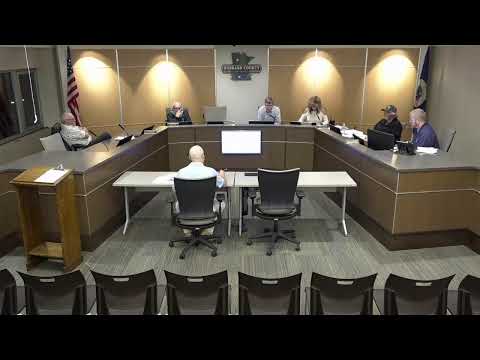
Hubbard County’s Planning Commission/Board of Adjustment (PCBOA) completed consideration of a large slate of variance applications, approving many with conditions and denying others after substantive discussion.
The board approved variance 39‑V‑25 (Raguse/Foss, Kerwin Lake) with conditions requiring demolition of one guest cottage (item E), limiting additional vegetation removal and setting a deadline for demolition (Sept. 1, 2026). Several other variances were approved with standard staff conditions, including: 47‑V‑25 (Roger and Jenny Hall; screened porches/addition), 48‑V‑25 (Michael Brooks; incline lift for accessibility), 49‑V‑25 (Penning; 8‑foot fence segment for safety/privacy), 50‑V‑25 (Eagle Bay Resorts; after‑the‑fact amendment to accept a completed cabin), 51‑V‑25 (Horsager; septic‑setback deviations), 52‑V‑25 (Pangrac; grading/house addition, approved with a condition that a 2009 variance be made null if acted on), 55‑V‑25 (Oak Guard Properties; minor subdivision variances), and 57‑V‑25 (MJK Living Trust; garage expansion).
The board denied several applications after extended discussion: 46‑V‑25 (IRP Meyer Lake replacement/expansion in the shore impact zone) was denied because alternatives and site constraints did not justify the requested nonconformity; 53‑V‑25 (Jeff and Jamie Barnett; a proposed new dwelling within the 100‑foot ordinary high water setback) was denied after the board concluded the nonconforming use rights had lapsed and practical alternatives existed; and 56‑V‑25 (Gary Page, Skunk Lake) — an after‑the‑fact grading application — was denied because extensive excavation altered steep slope character, introduced erosion risk and the work appeared to have been undertaken without proper permitting.
Votes were recorded by roll call for each action and those tallies were entered into the record. For items approved with conditions, the board typically adopted staff findings of fact and attached limits such as demolition deadlines, size limits for recreational clearing, or restrictions on vegetation removal.
Public comment at the meeting focused most strongly on erosion and lake access risks for the Skunk Lake site (56‑V‑25). Staff and board members repeatedly advised applicants with denied or constrained proposals to return with revised plans that place structures outside the shore impact zone or to pursue smaller, by‑permit options when feasible.
The PCBOA also approved administrative items including the Sept. 22 meeting minutes and closed the meeting after hearing a full agenda.