
Lakeland District committee debates tightening public-comment procedures and form requirements
Get AI-powered insights, summaries, and transcripts
Subscribe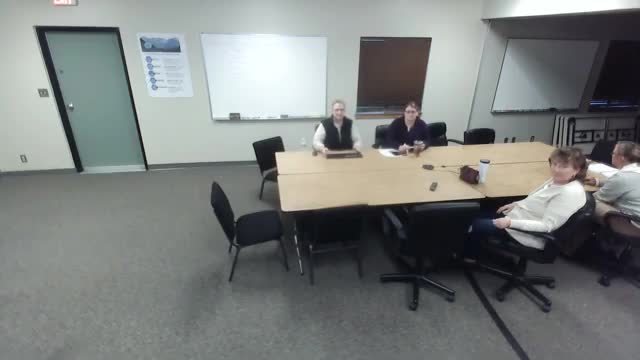
Summary
Members of the Lakeland District policy committee reviewed proposed revisions to Policy 4105 and form 4105F, focusing on sign-in paperwork, the chair's discretionary authority to limit speakers, the proper forum for personnel- and student-related complaints and whether public comment may be reopened later in meetings.
Members of the Lakeland District policy committee spent the meeting reviewing draft edits to Policy 4105 and the board's public-comment form (4105F), debating whether the district should tighten sign-in and paperwork requirements, clarify when public comment may be reopened, and make explicit that complaints about staff or individual students belong in executive session.
Committee members repeatedly said their goal was to preserve the public's right to speak while ensuring meetings remain orderly. Several members recommended making the sign-in form and its key warnings more prominent (for example, the portion that says personnel- or student-related complaints will be handled in executive session) and placing that language on the same physical page attendees receive when they sign up to speak.
The draft and discussion covered three procedural points that members emphasized. First, the draft retains a requirement that people sign in and submit a request-to-address-the-board form before the meeting starts; committee members said treating those submissions as the practical deadline for participation would reduce confusion when the committee or board reorders the agenda. Second, the committee discussed the existing provision in 4105F allowing the chair to "shorten or lengthen" speaking opportunities and in some circumstances deny a request to speak (for example, if the person addressed the board on the same subject within the prior two months). Some members expressed concern that language based on "may" is ambiguous and could produce inconsistent application across meetings; another member noted Rusty had flagged First Amendment concerns and asked the committee to scrutinize how discretion would be used.
Third, members debated whether public comment should be allowed to reopen later in a meeting. One practical concern: if public comment reopens and an attendee earlier in the meeting has left, reopening could deny that person the opportunity they expected. Multiple committee members recommended allowing the board to recognize people later in the meeting only if they had completed the sign-in and paperwork steps before the meeting's start or if the full board specifically authorized reopening public comment on a posted agenda item.
Members also discussed handling repetitive comments on high-interest items (for example, a levy). Several trustees proposed asking similar speakers to consolidate their remarks into a single representative presentation or a short group statement so the board can hear the range of public concerns without hearing the same point repeated dozens of times.
On confidentiality and scope, the committee recommended placing the policy language from Policy 1520 (which states that complaints about personnel or individual students are heard in executive session) more visibly on the public-comment materials so speakers understand what cannot be discussed in open session. Committee members argued that making this restriction explicit on the sign-in form protects students and staff and reduces instances where the board must interrupt or redirect a speaker at the meeting.
Next steps: committee members agreed to compile the comments collected during the meeting and forward the draft policy and form to the full board for review and direction. The full board will decide whether to adopt the committee's language, send the drafts back for further committee work, or put revised language out for public comment.
Ending: The committee did not vote on final language; it unanimously agreed to present the draft and the recorded comments to the full board for a decision at a future meeting.