Resident urges Lane County to prohibit automated license plate readers, cites privacy and legal risks
Loading...
Summary
A resident told the board the Lane County Sheriff's Office should not deploy ALPR/Flock Safety cameras on rural roads, warning the technology poses Fourth Amendment and statutory privacy risks and has a history of interagency data sharing and breaches.
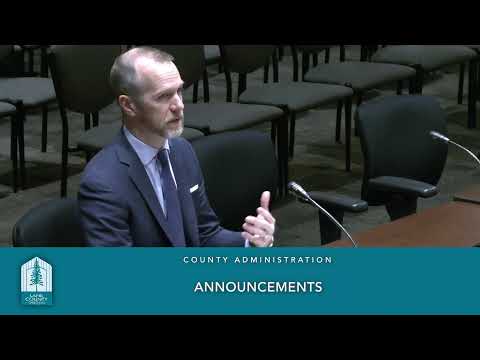
Ellie Grama, a Lane County resident from District 5, urged the Board of County Commissioners on Oct. 28 to prohibit the use of automated license plate readers (ALPRs), sometimes marketed as Flock Safety cameras, on county roads and highways.
Grama said she sympathized with the sheriff's staffing and budget constraints but added that "any contract with flock will result in misuse, further mistrust of law enforcement, and violate our Fourth Amendment right to privacy." She also cited pending litigation involving the ACLU of Oregon and disputes over whether ALPR systems comply with state law. "The language in the contract is vague and open to interpretation such that frequency of use or access is up to whomever is in charge down the road," Grama said.
Grama referenced Oregon Revised Statutes and noted that a civil liberties group told Eugene's city council the technology could conflict with ORS 181A.250, which restricts law enforcement from collecting information about political, religious or social views of groups unless it directly relates to a criminal investigation. She warned that ALPR systems collect location data on everyday movements and that data is stored by private companies and can be queried by multiple agencies. Grama pointed to recent incidents in Washington state in which police departments unintentionally shared ALPR data with federal agents, saying unauthorized queries are "plentiful because that's how the technology is intended to work."
Grama asked the board to "prohibit the use of LPRs in Lane County," and urged commissioners to consider guardrails and oversight before allowing the technology. The sheriff was referenced during the comment, and Grama acknowledged the office's stated interest in exploring ALPRs for rural policing but said stronger legal protections would be required.
The board did not take a formal vote on the request during the meeting; the comment was part of the public comment period.