Montgomery County previews 2026 budget, plans to use $10.08 million of fund balance
Loading...
Summary
County leaders held a special meeting to conduct a preliminary review of the 2026 budget, discussing increased use of fund balance to cover capital and operating needs and uneven tax impacts across the county’s 11 municipalities.
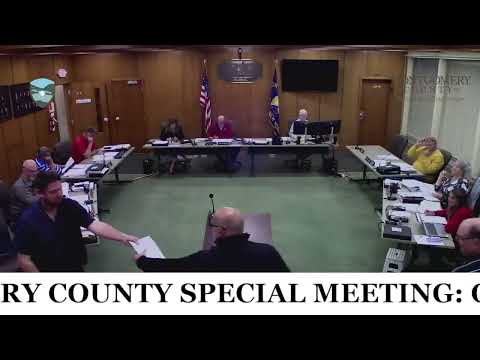
Chair Papp called the special meeting to order “for the discussion of the budget, for 2026 with the executive and the treasurer.” The meeting focused on a department-by-department preliminary review ahead of budget workshops scheduled for the following week.
County staff told legislators the draft budget increases planned use of fund balance from about $7.2 million last year to $10.08 million for 2026. Staff said roughly $4 million of that would pay for capital projects the county intends to finance with cash rather than borrowing; about $9.4 million would be applied to balance ongoing operations. The draft also assumes $45 million in sales tax revenue, a small rise from last year’s reported $44–45 million.
Why it matters: staff and elected officials said the fund-balance draw and assumptions about sales tax are central to balancing the budget and will affect property tax rates. A county summary sheet circulated to legislators shows the proposed budget would reduce tax rates in six of the county’s 11 municipalities while increasing rates in five, a pattern officials attributed primarily to unequalized assessment ratios that have not been updated through reassessment.
Officials warned of risks. Peter (the county executive) and Sean (the treasurer) explained the county will exhaust a large portion of ARPA funds by the end of the 2026 year; staff said the ARPA balance “will totally be expended by the end of 20 six,” and that interest earnings tied to those invested ARPA funds will decline. Legislators and staff also discussed that personnel costs and upcoming labor contract settlements could require further use of fund balance once negotiated. Chair Papp said collective-bargaining costs are being kept off the detailed budget until amounts are settled, but said negotiators should assume “a mid-six-figure amount” when planning for eventual payments.
The executive and treasurer summarized next steps: department-specific workshops the following Wednesday (public works, Department of Social Services, public health and the public defender were suggested additions), a public hearing the following Tuesday at 5:55 p.m., and follow-up adjustments after department hearings. Chair Papp urged legislators to identify any other departments they want to bring to next week’s workshops.
Legislators repeatedly emphasized restraint. Legislator Hedwell Jr. noted department heads had been asked to “hold the line” in budget requests; several department heads nevertheless requested personnel or program increases that staff trimmed in the draft. Chair Papp praised department heads for making cuts where possible but warned the county cannot rely on continued sales-tax growth and that “we're right at the tax cap.”
Looking ahead: staff said they will supply detailed bond schedules and other back-of-budget documents referenced during the meeting, and they will update the draft after the coming workshops and any late adjustments tied to contract settlements.