Get AI Briefings, Transcripts & Alerts on Local & National Government Meetings — Forever.
Oklahoma enacts hospital price-transparency law; state site to publish prices Nov. 1
Summary
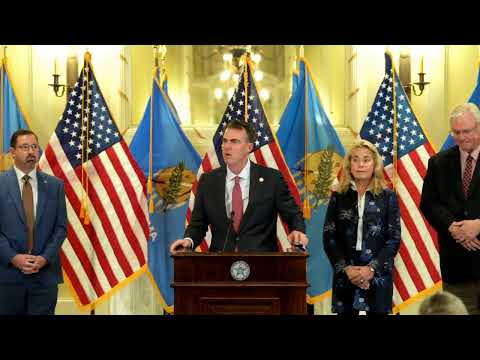
Gov. Stitt, Governor of Oklahoma, and supporters said Oklahoma will require hospitals to publish prices for procedures and negotiated rates under Senate Bill 889, with the law taking effect Nov. 1 and the state Department of Health overseeing compliance.
Gov. Stitt, Governor of Oklahoma, and supporters said Oklahoma will require hospitals to publish prices for procedures and negotiated rates under Senate Bill 889, with the law taking effect Nov. 1 and the state Department of Health overseeing compliance.
Cynthia Fisher, president of PatientRightsAdvocate.org, said the law will make hospital pricing transparent, protect patients from collections when providers fail to provide prices and give consumers a private right of action for overcharges. "November 1, you change history, really being the leading state in the country to protect patients and to help lower cost of health care by pulling back the curtain," Fisher said.
Supporters said the change matters because of wide price variation for the same services. Fisher said a colonoscopy can vary by as much as tenfold, with one patient billed about $1,200 and another more than $12,000 for the same procedure, and that cash MRI prices can be near $300 while insured hospital rates average around $3,000 and rise as high as $7,500. "When you can see an MRI, a cash price for an MRI is around $300," she said.
The law will require each hospital to post a set of 300 shoppable procedures in an easy-to-use format and to make the full set of posted prices and negotiated rates available on its own website. Fisher said the state's site, oklahomahospitalprices.org, will host the files hospitals submit so consumers and employers can compare prices across facilities and plans.
Rep. Keith Olsen, who spoke about provisions of the measure, said the law will show the maximums and minimums of negotiated reimbursements from insurance companies, giving employers and plan designers more information to steer patients to lower-cost options. "It's not just the prices and cash discounts, but you also see the maximums and minimums of the negotiated reimbursements," Olsen said.
Dr. Keith Smith, co-founder of the Surgery Center of Oklahoma and the Free Market Medical Association, praised the measure as putting a price on services in a way that allows competition to work. "I don't think it's a reach to say that the idea that a price can be attached to a medical service originated right here in Oklahoma," Smith said, adding that the Free Market Medical Association's model has spread to other states.
Supporters described two consumer protections included in their explanation of the law: that a patient who did not receive a posted price cannot be pursued for medical debt tied to that undisclosed price, and that harmed patients have a private right to pursue overcharges. Fisher said the protections will also help self-insured employers and state plans design benefits that steer members to lower-cost care.
On implementation, speakers said the Department of Health will oversee compliance and that hospitals must post both the 300-procedure shoppable list and the full set of posted prices and discounts on their websites. Fisher said the state tool will present those files in a comparative, searchable format.
Supporters said they expect increased transparency to lower prices by enabling shopping and competition, and they pointed to examples such as bundled cash pricing for procedures (including anesthesia and facility fees) that are often far lower than opaque hospital billing.
The announcement came alongside separate remarks by the governor about federal spending and state efforts on homelessness and food assistance; those items were discussed by the governor but are separate from the price-transparency law.
Officials provided effective-date and consumer-protection details during the remarks but did not provide a transcript-recorded vote or the final enrolled bill text during the event. The Department of Health and individual hospitals will be the primary points of contact for posted files and compliance questions.