Get Full Government Meeting Transcripts, Videos, & Alerts Forever!
Get email alerts on the Habitat Restoration topic
No spam. Unsubscribe anytime.
Volunteer group credits river cleanups for return of steelhead to San Benito-area streams
Summary
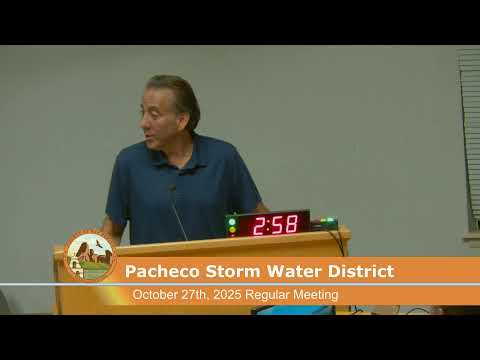
At the Oct. 27 Pacheco Stormwater District meeting, Herman Garcia of Coastal Habitat Education and Environmental Restoration (CHEER) described volunteer-led habitat reclamation that he said helped steelhead return to the San Benito River and other creek systems. Garcia outlined CHEER’s methods, partnerships and volunteer needs.
Herman Garcia, a volunteer with Coastal Habitat Education and Environmental Restoration (CHEER), told the Pacheco Stormwater District on Oct. 27 that sustained volunteer cleanup work on the San Benito and Pajaro river systems has improved habitat and helped migrating steelhead return to waterways where they had been absent for decades.
“We were taking out 3 to 5,000 pounds of garbage a day every day,” Garcia said, describing an 18-month effort on the lower reach of the San Benito River. CHEER, he said, is a 501(c)(3) that is “all volunteers, no paid staff” most of the time and works in coordination with federal biologists.
The nonprofit, Garcia said, covers an area he described as roughly 2,000 square miles of watershed and thousands of miles of streams, and its volunteers use hand crews, chainsaws, block-and-tackle and winches for removals designed to protect riparian corridors. He credited the cleanups with producing observable changes in fish migration: after the reclamation work, steelhead that had been bypassing the San Benito River began entering it, and CHEER documented fish in reaches where local residents said none had been seen for 75 years.
Garcia detailed historic rescue totals that CHEER recorded after it began federal trainings and partnerships: about 120 fish in 2016, 1,452 in 2017 and 23,512 in 2018. He said those rescues were accompanied by immediate habitat-reclamation responses when volunteers noticed blockages, pollutants or illegal dumping.
Operationally, Garcia said CHEER avoids heavy equipment where possible to limit bank disturbance and prefers manual removal and careful cutting of large wood unless danger of flooding requires larger equipment. He also described longstanding partnerships that reduce operating costs, including a Recology arrangement that waives dump fees for CHEER loads; Garcia said a full load would otherwise cost roughly $1,250 to $1,500 and that the group sometimes fills one or two loads a day.
Trustees asked about work specifically in Pacheco Creek. Garcia said CHEER periodically conducts work there but that much of Pacheco runs through private property, which affects where and how often crews can operate. He offered to help property owners with localized problems and said CHEER can provide in-kind match for funding when grants or mitigation money are available.
Garcia emphasized education and outreach alongside physical cleanup, noting past school lectures and his work training volunteers with federal biologists when steelhead were listed as threatened. He said the goal after reclamation is regular maintenance to sustain habitat for fisheries and, ultimately, local economic benefits tied to healthier waterways.
For follow-up, Garcia invited trustees and property owners to contact him directly and said CHEER will negotiate project-specific contributions and costs.
Ending — Trustees thanked Garcia and said staff would follow up on possible local partnerships and funding opportunities.