Get Full Government Meeting Transcripts, Videos, & Alerts Forever!
Get email alerts on the Assigned Counsel topic
No spam. Unsubscribe anytime.
Montgomery County reduces assigned-counsel request to cover immediate vouchers after lawmakers press for detail
Summary
After a lengthy debate about rising assigned-counsel bills and state reimbursement timing, the Montgomery County Legislature amended a $450,000 budget request for assigned counsel down to about $170,000 to pay outstanding vouchers and asked staff to return with more detail for future budgeting.
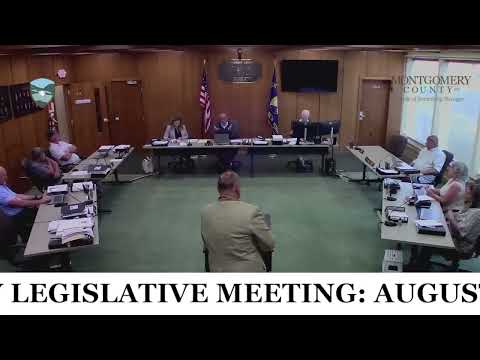
At the August meeting of the Montgomery County Legislature, members amended and approved Resolution 2-13, which amends the 2025 operating budget to cover assigned-counsel vouchers, after an extended debate about funding, state reimbursement and increasing caseloads.
Legislators said the resolution arrived with limited detail and that the requested outlay — discussed in the meeting as $450,000 — was “a large hit to our fund balance out of the blue,” prompting questions about how hourly rates, case volume and state reimbursement interact. Attorney Francisco and the county treasurer answered lawmakers’ questions about billing and reimbursement timing.
The core points of discussion were: the effective hourly rate paid to private attorneys handling assigned cases rose substantially (participants cited the higher rates the county is now being billed), the county must front the full voucher amounts and then seek reimbursement from the state, and reimbursements are being processed on a lag (legislators were told it can be about a six-month lag). The treasurer said the state program will reimburse roughly 50% of eligible vouchers once claims are processed, which offsets some but not all of the county outlay.
Legislators pressed for better budgeting practices and regular reporting of voucher and claim activity so the Legislature can anticipate midyear outlays. One legislator said the treasurer’s office reported about $125,000 in state reimbursements year to date, which the Legislature viewed as evidence that some offsetting revenue does arrive but that timing creates cash-flow pressure.
After discussion, a motion was made and passed to amend the resolution’s dollar amount to provide approximately $170,000 to cover outstanding vouchers through the present billing cycle; the amended resolution then passed. Legislators asked that county staff and the treasurer return with a more detailed follow-up resolution showing the caseload math, reimbursement history and a recommended figure for the 2026 budget.
The debate also touched on how conflicts are declared that require assignment out to private counsel. Legislators and staff noted that family-court cases commonly generate assignments because a public defender cannot represent both sides; speakers said overall caseloads in criminal and family court have increased in recent years, producing more assigned-counsel vouchers.
What the Legislature decided: the body approved Resolution 2-13 as amended to provide funds to pay current outstanding vouchers (about $170,000) and directed staff to prepare a more detailed proposal and reimbursement summary for a future meeting to inform budgeting for 2026.
Quote from the meeting: a legislator summarized the action at the end of the debate: “I would like to make a motion to amend this resolution, and change the dollar amounts, from $450,000 to $170,000 right now.” The motion passed and the amended resolution passed thereafter.
Context and next steps: County staff, the treasurer and the public defender/assigned-counsel coordinator were asked to collaborate and produce a follow-up report that includes voucher volume, the schedule for state reimbursements, and a recommended budget number for 2026.