Get Full Government Meeting Transcripts, Videos, & Alerts Forever!
Get email alerts on the Abandoned Vehicles topic
No spam. Unsubscribe anytime.
Santa Cruz supervisors approve steps to enforce abandoned-vehicle rules after debate over RVs and safe parking
Summary
The Santa Cruz County Board of Supervisors on Oct. 7 voted to approve a package of steps to enforce County Code chapter 9.57, aimed at addressing abandoned and inoperative vehicles on county streets, while directing outreach and coordination with safe-parking programs.
The Santa Cruz County Board of Supervisors on Oct. 7 voted to approve a package of steps aimed at strengthening enforcement of County Code chapter 9.57, which governs abandoned, wrecked, dismantled or inoperative vehicles on county streets.
Supervisor Koenig, who presented the revised code language, said the update is intended to give the county clearer authority to address vehicles parked on county streets for more than 72 hours and to enable tow-and-dismantle actions after a 10-day storage/notice period. "The purpose of this ordinance update is, or code update is really to ensure that the county has the ability to enforce its, its code prohibiting parking on county streets for over 72 hours," Koenig said during the presentation.
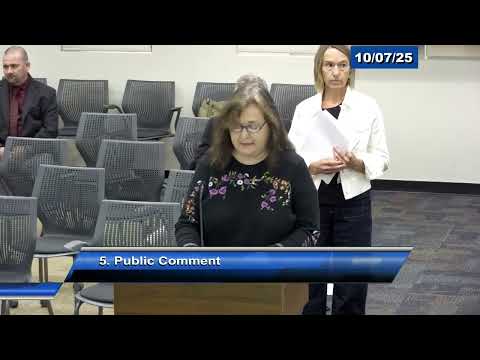
The ordinance revision was the subject of extensive public comment. Several residents and advocacy speakers urged the board to avoid policies that would harm people living in vehicles and to prioritize outreach, safe-parking expansion and low-cost repair or storage alternatives. "I ask that you reach out to the faith based community … Why can't we make agreements with the faith based community to maybe have a rotating locations where people can go," a public speaker told the board during comment.
Lieutenant Nick Baldridge of the Santa Cruz County Sheriff’s Office said the intent of the update is not to stage a large, punitive sweep but to create leverage for cooperation and outreach. "The intent isn't to do a massive sweep and get every RV off," Baldridge said. He described practical barriers tow companies have raised, particularly limited yard space for oversized RVs, and said many of the vehicles the ordinance targets are stationary for long periods.
Robert Ratner, director of the county's Housing for Health division, described the county's existing safe-parking work and outreach capacity. He said the county contracts with the Association of Faith Communities (AFC) for safe parking (AFC currently manages about 60 safe-parking spaces countywide and has a contract totaling more than $600,000) and with Housing Matters for outreach. Ratner said AFC estimates management costs at about $7,300 per space per year and that program rules require participating vehicles to be operable, registered and insured.
Board discussion centered on several recurring concerns: whether the update adequately distinguishes between ordinary passenger cars and oversized inoperable RVs; whether the ordinance provides mandatory outreach or simply permits enforcement; how private-property situations will be handled; and the fiscal and logistical capacity of tow yards and dismantlers. Supervisor Cummings repeatedly urged that the code be narrowed to focus specifically on inoperable RVs rather than all vehicles and asked for explicit outreach requirements before enforcement. "This ordinance does not distinguish between cars, vans and oversized vehicles. For that reason, I'm not going to support it," Cummings said.
The board split the item into two votes. Supervisor Koenig moved recommended actions 1–3 (which include the code update steps and certain implementation measures) with additional direction that the Sheriff's Office provide an update on vehicle abatement and the impact of the ordinance during the upcoming budget hearings; the motion passed 4–1 (DeCerpa, Martinez, Koenig, Hernandez in favor; Cummings opposed). Koenig then moved recommended actions 4–6 (directing Housing for Health staff to coordinate with the cities of Santa Cruz and Watsonville and to explore additional safe-parking sites and report back); that motion also passed 4–1.
Votes at a glance
- Recommended actions 1–3 (code update and implementation measures): Passed 4–1. Vote: DeCerpa Aye; Cummings No; Martinez Aye; Koenig Aye; Hernandez Aye. - Recommended actions 4–6 (coordination with cities; safe-parking exploration; report back): Passed 4–1. Vote: DeCerpa Aye; Cummings No; Martinez Aye; Koenig Aye; Hernandez Aye.
Clarifying details discussed during the meeting included the 72-hour parking threshold in the draft code, the 10-day notification/storage period before dismantling, and an informal $1,500 average estimate per RV tow (actual towing/storage cost varies by district and distance). County staff said the current number of vehicles likely to be affected in unincorporated areas is small (several vehicles at present, described by one supervisor as "5 or 6"), but agreed the issue can recur.
The board directed follow-up reporting and coordination: Housing for Health staff will coordinate with the City of Santa Cruz and Watsonville on safe-parking participants and sites and will report back (Supervisor Koenig indicated a Nov. 18 status report in the presentation), and the Sheriff's Office was asked to present vehicle-abatement impacts during budget hearings. Staff also noted the county has existing contracts and programs that could be expanded if additional resources are identified.
The ordinance update and related implementation steps are administrative and regulatory changes to chapter 9.57 of the Santa Cruz County Code; the board did not adopt an immediate countywide demolition campaign or announce a mass sweep. Several public commenters and supervisors asked for enhanced oversight metrics (for example, a one-year report on impacts, criteria and numbers of vehicles affected) and for consideration of low-cost alternatives that could preserve vehicles for people who are complying with safe-parking programs.
The board adjourned after completing the regular agenda and announced a later special meeting location.