SMMA chosen as preferred designer; lays out feasibility schedule, community engagement and site constraints for Medford High
Loading...
Summary
SMMA was recommended as the preferred designer for the Medford High School project after a designer selection panel reviewed proposals and interviews; contract negotiations with the city and district are ongoing and SMMA presented a phased feasibility and engagement plan.
SMMA was recommended as the preferred designer for the Medford High School project after a designer selection panel (DSP) reviewed four proposals and interviewed three firms, school staff told the Medford Comprehensive High School Building Committee. Contract negotiations between the city, district and SMMA are ongoing.
The recommendation follows a two‑meeting DSP process. "They voted SMMA first, which is why you see them here tonight," a staff presentation said during the selection recap. The panel included local and regional members; SMMA was ranked first in the final DSP vote.
Why it matters: the choice of designer sets the technical team that will lead feasibility investigations required by the Massachusetts School Building Authority (MSBA), produce the educational program and space summary, and develop the cost and schedule estimates the city and school committee will rely on when presenting options to the public.
SMMA introduced a multi‑disciplinary team and a phased work plan that begins with a Preliminary Design Program (PDP) and moves to a Preferred Schematic Report (PSR). Matt Rice, SMMA’s principal in charge, told the committee he has local familiarity with traffic and campus constraints from attending school events in Medford. "I will say that I've been coming to Medford High School for quite a few years for soccer games," he said, noting the team’s local experience.
SMMA said the feasibility work will document three required MSBA options — code repair, an addition/renovation option, and an all‑new construction option — then identify a preferred option for submission to MSBA. The team also described a target cadence: PDP work now, a PSR developed over subsequent months, and a planned PSR submission to permit an MSBA board review in late spring/early summer. SMMA emphasized that schematic design and budget setting follow MSBA authorization.
SMMA framed educational planning and visioning as central to design. The firm plans immersion work (site visits, classroom observations), visioning sessions with an educational forum and leadership team, and department‑level programming workshops to compile the space summary that defines room types, sizes and adjacencies.
On site constraints and program integration, SMMA briefed the committee on access points, an approximately 80‑foot vertical grade change across the campus, the Fells trailhead and shared community uses (fields, pool, evening/weekend athletics). SMMA noted these factors will drive site layout and phasing decisions and said options may include locating a new building in the main parking lot, on the Field of Dreams, or a hybrid solution.
SMMA also flagged high‑value existing assets that influence design strategy: a gymnasium currently larger than MSBA will fully reimburse, a pool used by the community, and existing CTE workshops. The firm advised the committee that preserving oversized assets often requires renovation approaches because MSBA reimbursement has statutory caps on new construction (SMMA explained MSBA will reimburse renovation costs on existing larger spaces up to MSBA limits, with communities covering any excess).
SMMA said contract negotiations and budget alignment with MSBA remain underway and that early investigative work (hazardous materials, geotechnical testing, site survey) will be required to produce reliable cost estimates.
"SMMA is here to support the city of Medford, and I'm here to support you and our team with whatever you need," Lorraine Pennington, SMMA chair and CEO, said during introductions.
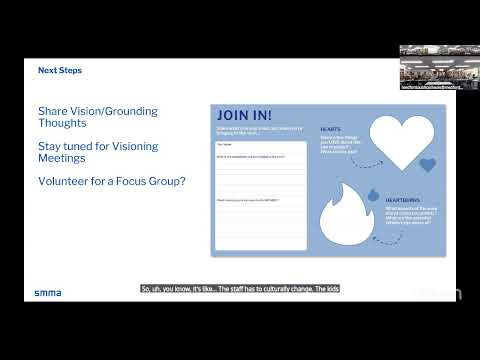
Next steps: SMMA will begin PDP activities, schedule educational visioning sessions and programming meetings, and coordinate with district and city staff to post engagement materials. The committee pressed for clear timing and outreach plans; SMMA said it will present a public engagement calendar and suggested targeted focus groups for CTE advisory input, DESE safety reviews, and community focus groups.
Provenance: SMMA selection and team introduction begin in the DSP recap and continue through the team presentation and Q&A (topic introduction: transcript 2239.75–2331.635; topic finish: transcript 2971.56–2994.97).