DPH outlines rules for new "retired" physician license, seeks board input
Loading...
Summary
The Department of Public Health presented the board with an early draft approach to regulating a new "retired" physician licensure category that the legislature created last session, saying the rules are still in development and will be circulated for formal comment.
The Department of Public Health presented the board with an early draft approach to regulating a new "retired" physician licensure category that the legislature created last session, saying the rules are still in development and will be circulated for formal comment.
DPH Regulatory Affairs Manager Dante Costa said the statute establishes a reduced fee category intended to let physicians who no longer want to practice full time provide volunteer services. "My name is Dante Costa. I'm an attorney here at DPH, I work with the Office of Policy and Strategic Initiatives, and I'm the Regulatory Affairs Manager," Costa said as he outlined required regulatory elements.
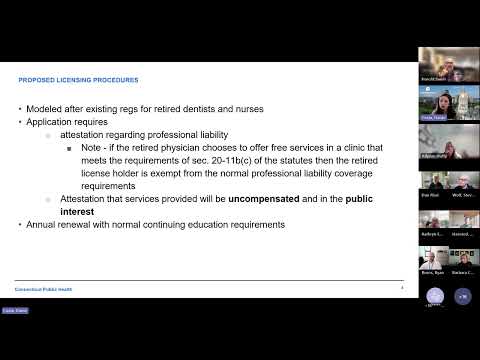
Costa told the board the statute requires the department to define who qualifies as "retired," set procedures for applying or reinstating into the category, and identify any appropriate limits on scope of practice. He said DPH plans to require applicants to attest that services performed under the retired license will be uncompensated, will be in the public interest, and that the applicant has professional liability coverage. Costa noted DPH already has parallel rules for retired dentists and nurses that will help shape the physician rules.
Board members pressed staff about malpractice protection. "If I participate in, let's say, a free clinic . . . and then a patient has some adverse event . . . and I'm no longer carrying malpractice insurance, how am I protected?" asked Doctor Green. Costa replied that applicants must attest to coverage when they apply and that volunteers could potentially provide services at clinics that qualify for an existing statutory exemption from professional-liability requirements, but he said he would follow up to clarify the scope of the clinic exemption versus the individual obligation to hold liability coverage.
On the scope of practice, Costa said the commissioner's office favors a flexible approach that would allow retired physicians to practice within their area of expertise rather than be limited to a narrow list of specialties. Miriam, a DPH staffer who joined the presentation, said other states sometimes limit volunteer licenses to primary care or certain specialties, but that limitation would exclude specialty volunteers the department wants to engage.
Board members asked that DPH circulate the draft regulations directly to the board when they are posted for public comment and requested that staff return the draft for consideration at a future meeting. Costa said the regulations have been through legal review, require the commissioner's approval, and would be distributed to the board in writing before formal publication.
DPH staff identified the department's immediate next steps as finalizing a draft for internal review, circulating it to stakeholders (including the board), and opening a formal public comment period. Board members recommended DPH consider convening a representative group of practicing physicians across specialties for input and to clarify practical questions such as whether clinics that accept volunteer physicians may bill facility fees and how existing clinic exemptions interact with individual malpractice coverage.
DPH did not provide a statute number or a draft text during the meeting; staff said those materials will be provided to the board when available.