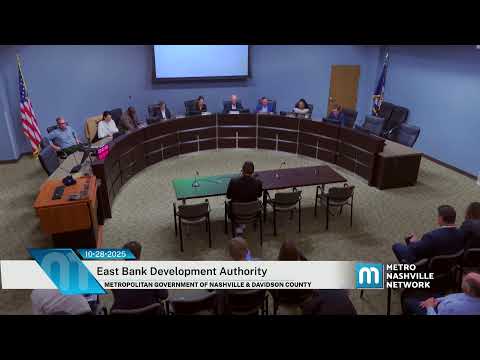
HDR outlines program management, master utility plans and cash‑flow work for East Bank projects
Loading...
Summary
HDR, the East Bank program manager, told the authority it is overseeing 29 projects across six developments and is implementing master utility plans, quality control procedures and a cash‑flow model tied to the $125,000,000 IGA.
HDR presented a detailed program‑management update to the board, describing staffing additions, oversight procedures and tools HDR is using to coordinate project delivery across the East Bank program.
“Currently we have 6 developments that we're aware of,” HDR said, and staff identified 29 discrete projects associated with those developments. HDR said roughly a third of projects are in planning, about half are in engineering/design, and five projects are currently in construction. HDR described three master utility plans — for River North, the Central Waterfront District and South of Shelby — and said design teams are required to follow those master plans to avoid design conflicts.
HDR described quality control requirements and internal and external audits: “All contractors and consultants that work on the program are required to submit a quality control plan that's project specific,” the presenter said. The firm explained it is leading cost estimating using Heavy Bid software, applying contingencies and building inflation into its estimates, and reviewing contractor estimates to reconcile scope differences.
On data systems, HDR said Metro has adopted OPC and Unifier enterprise construction project software and asked the East Bank authority to be the first department to roll out the system; HDR said it is near a useful implementation for document control, schedules and quarterly reporting. On environmental work HDR discussed progress toward a voluntary brownfield agreement (VOAP) with the Tennessee Department of Environment and Conservation and said staff expect a legally binding voluntary agreement in the first quarter of next year; HDR has prepared soil management plans, conducted borings and lab work and performs construction observation to confirm spoils handling.
HDR said it is building a cash‑flow model that tracks the authority’s $125,000,000 intergovernmental agreement (IGA) allocations, obligations and remaining balances to support capital spending requests and sequencing. The firm told the board it has applied for nearly $100,000,000 in grants to support projects and is coordinating grant work with GNRC.
Board members asked about procurement and participation by local contractors; HDR said current work leans on Metro contracts but the authority intends to run open procurements for upcoming design and construction services with procurement standards modeled on best practices from local municipalities.