Get Full Government Meeting Transcripts, Videos, & Alerts Forever!
Get email alerts on the Public Comment Policy topic
No spam. Unsubscribe anytime.
Coffee County committee clarifies public-comment limits, forwards policy to legislative committee
Summary
The committee clarified that public-comment time limits apply per agenda item, kept the 10-speaker/30-minute structure as written, rejected an amendment to expand eligibility to 'property owners,' and sent the revised policy to the legislative committee and ultimately to the full commission for final decisions on numbers and time limits.
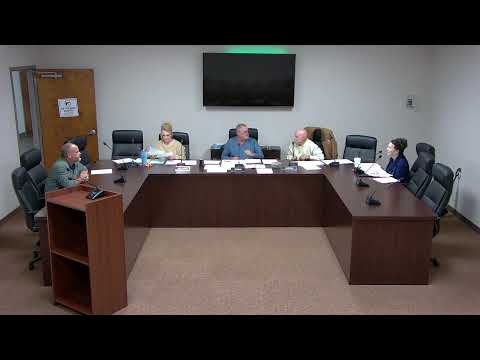
The Coffee County Policy and Procedures Committee reviewed a revised public-comment policy Oct. 27 and approved a clarification that the existing speaker-time limits apply per item on the agenda.
Committee members debated whether speakers could "donate" time to another person, whether the sign-up sheet should capture name, address, topic and whether the speaker is "for" or "against," and whether the policy’s 10-speaker/30-minute cap should be treated per agenda item. The committee agreed the sign-up sheet should include the requested fields and that the public-comment cap needs an explicit line clarifying it applies per agenda item.
A proposal to allow donation of time was discussed and committee members noted state guidance cited in earlier review discouraged unlimited borrowing of time. One committee member said the committee should "let more people talk" but others emphasized the need to avoid repetitive testimony.
Committee members debated widening the eligibility language from "Coffee County residents" to "Coffee County residents/property owners." A motion to add "property owners" to the eligibility line failed for lack of a second, and the committee decided to send the revised public-comment policy as written to the legislative committee for drafting and then to the full commission for final refinement.
The committee noted the chairman of the full commission may allow exceptions (for example by suspending rules) for topics that draw larger crowds, but retained the policy’s core limits and sign-up requirements pending final review.