Get Full Government Meeting Transcripts, Videos, & Alerts Forever!
Get email alerts on the Special Education Reimbursement topic
No spam. Unsubscribe anytime.
Small districts ask legislature to fund special‑education placements monthly or quarterly instead of in arrears
Summary
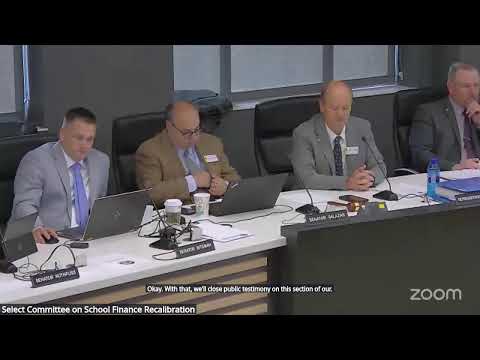
Superintendents and business managers told the Select Committee on School Finance on Oct. 28 that costly special‑education placements often require districts to front the expense and be reimbursed in the following fiscal year, a timing practice several said imposes untenable cash‑flow pressure on small districts.
Superintendents and business managers from small Wyoming districts told the Select Committee on School Finance that state reimbursement for costly special‑education placements occurs too late to avoid acute local cash‑flow pressure.
Annie Griffin, superintendent and special‑education director for Ten Sleep and other small districts, said the state reimburses districts “for the previous year spending over the next 10 months of the fiscal year,” and that a costly residential placement in her district represented ‘‘9% of our total operating budget.’’ She asked the committee to consider changing the reimbursement cadence from next‑year payment to monthly or quarterly payments that would reduce the need for districts to set aside large reserves or take short‑term debt.
Why it matters: When districts pay for residential or out‑of‑district day placements up front and are reimbursed in the following fiscal year, the upfront obligation can force districts to divert funds from other uses or to hold large reserves. Ten Sleep’s superintendent said the district used its 30% set‑aside to cover a placement and would have sought a loan otherwise.
District requests and cautions: Superintendents also urged the committee to avoid new categorical grants that restrict how districts use funds; they argued flexibility (a block‑grant approach) allows districts to respond to each district’s special‑education costs and staffing realities. At the same time, several business officers asked for clearer, timely state data on district uses of ECAs and other increases so local boards can make informed decisions.
Next steps: Committee members asked clarifying questions but made no decisions at the hearing. The request to change reimbursement timing will require statutory or administrative changes and a fiscal analysis before the committee could recommend a change to the Legislature.