Gaithersburg leaders and COG warn federal downsizing is already denting the local economy; new regional job platform gains users
Loading...
Summary
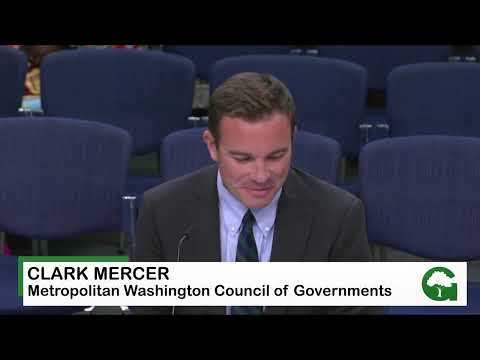
Gaithersburg Mayor (Jim) and the City Council on Oct. 27 heard a briefing from Clark Mercer, executive director of the Metropolitan Washington Council of Governments, and Sharon Disk, Gaithersburg’s economic development manager, who said federal workforce reductions and agency relocations are already affecting the regional and local economy.
Gaithersburg Mayor (Jim) and the City Council on Oct. 27 heard a briefing from Clark Mercer, executive director of the Metropolitan Washington Council of Governments, and Sharon Disk, Gaithersburg’s economic development manager, who said federal workforce reductions and agency relocations are already affecting the regional and local economy.
“The challenge of federal downsizing is really, a regional issue that mandates a regional solution,” Disk said during the work session. Mercer described COG’s convening role across Maryland, Virginia and the District and warned the region must act together to limit economic damage.
Why it matters: A large share of the area’s payroll and related spending flows from federal employment and contractors. Mercer cited multiple federal-employment measures and said that, depending on the dataset, about 302,000 federal employees live in Maryland and roughly 330,000 live in Virginia. At the local level, Disk said Gaithersburg lost 978 jobs when comparing August 2025 with August 2024 and that the city’s unemployment rate rose from 3% to 4% over the same period.
COG’s evidence and regional response: Mercer outlined three groups affected by federal changes: those who exhausted benefits after Sept. 30, employees subject to formal reductions in force (RIFs), and agency jobs relocated out of the region. He said data from multiple researchers and institutions is inconsistent, prompting COG to coordinate with Brookings and area universities on a shared monitoring effort. Mercer encouraged local officials to use the DMV Monitor and shared indicators including a 30% decline in internships regionwide and a 64% year-over-year increase in homes for sale in the most recent Brookings analysis.
TalentCapital.ai and workforce tools: Mercer introduced TalentCapital.ai, a regional job-and-training portal that aggregates job fairs, community-college programs and employer postings across jurisdictions. “We’ve had almost 50,000 unique, visitors and 12,000 individuals that are regularly engaged on the site,” Mercer said. The site uses resume matching and an AI agent to suggest trainings, certifications and local programs; COG staff and partners are working with Montgomery College, George Washington University, the University of the District of Columbia and Northern Virginia Community College on training connections and apprenticeship programs.
Local market effects: Disk presented locality-level indicators showing earlier post‑pandemic employment gains have weakened. She reported that the Frederick–Gaithersburg–Bethesda MSA had 48,800 jobs in August 2025, a decline of about 5,400 jobs year over year. Disk said the for-sale housing market has remained supported by long-term supply shortages, but apartment vacancy rates rose and market rents declined, and commercial leasing activity has slowed with negative net absorption.
Policy and infrastructure issues: Mercer said regional coordination is needed on transportation and transit funding (Metro, bus operators, VRE, MARC) and on aligning economic development strategies across three states. He noted that for the National Capital Region a project must appear in the MPO long-range plan to receive federal transportation dollars: “if you have a transportation project in this region, it has to go through our long term plan.” He and Disk also highlighted constraints such as limited greenfield sites in parts of Montgomery County, utility capacity questions for some growth industries (notably data centers) and the need to align higher-education training with employer needs.
Council questions and takeaways: Councilmembers asked about data sources (Disk cited CoStar for rent figures), regional marketing, entrepreneurship supports and steps to retain large employers such as life‑sciences firms. Mercer and Kayla Joyner, COG’s government relations associate, said the region needs dedicated funding (state and private partners) for internships, paid apprenticeships and entrepreneurship grants and that the region must cohere around a small set of shared legislative priorities when engaging Annapolis and Richmond.
Public comment: Resident Russell Kennedy, who identified himself as a former federal agency employee, urged officials to consider the value of government-produced data products — for example, NOAA nautical charts and weather services — and asked whether those agency functions and datasets remain protected amid federal changes.
What’s next: Presenters and council members emphasized continued regional coordination, workforce re‑training, and targeted investments in internships and apprenticeship programs to blunt the local effects of federal downsizing. No formal votes or actions were taken during the session. The Mayor and Council’s next meeting is scheduled for Nov. 17, 2025.