Get Full Government Meeting Transcripts, Videos, & Alerts Forever!
Get email alerts on the White Stadium Decision Making topic
No spam. Unsubscribe anytime.
Council panel grills White Stadium process as experts present $64.6M public alternative
Summary
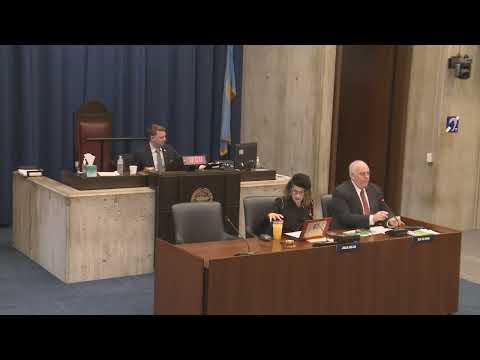
The Boston City Council's Committee on Post Audit, Government Accountability, Transparency, and Accessibility convened on Oct. 28 to examine how the administration handled decision-making around the White Stadium redevelopment, with experts and residents faulting the process for hurried timelines, uneven outreach and uncertain costs.
The Boston City Council's Committee on Post Audit, Government Accountability, Transparency, and Accessibility convened on Oct. 28 to examine how the administration handled decision-making around the White Stadium redevelopment, with experts and residents faulting the process for hurried timelines, uneven outreach and uncertain costs.
Councilor Julia Mejia, at-large city councilor and chair of the committee, opened the hearing by saying the session was about "process, how decisions are made, who is included in those decisions," and added, "This moment is a test of leadership and accountability." The committee heard testimony from economists, designers, civil-rights experts, NAACP representatives and dozens of residents and youth during an eight-hour session.
Why it matters: Project advocates say a rebuilt White Stadium could deliver new sports facilities for Boston Public Schools and host a newly awarded professional women's soccer franchise. Opponents and several expert witnesses said the city's negotiated plan with Boston Unity Soccer Partners (BUSP) was advanced without sufficient alternatives analysis, lacked clear long-term financial and transportation plans, and carried legal and equity risks.
Cost and alternatives: Economist Andrew Cymbalist reviewed figures cited in city documents, tracing an early budget of $10.5 million to subsequent estimates of $50 million and $91 million and noting a city document that referenced a $172 million figure. "In my judgment, the BUSP plan for a new stadium does not meet this standard," Cymbalist testified, arguing the city should account for alternative uses of public funds.
Dan Adams, an urban designer with Landing Studio and director of Northeastern University's school of architecture, presented a community-centered alternative that preserves public amenities and the west grandstand facade. "Totaling about $64,600,000," Adams said of the public option and described a staged approach, including an initial roughly $12 million first phase to restore track and field use quickly for schools and neighborhood recreation.
Legal, equity and environmental concerns: Retired trial judge Shannon Friesen told the committee that the process raised potential civil-rights and procedural-due-process concerns and cited federal Title VI protections and state civil-rights statutes as legal avenues that could be relevant if community exclusion were proven. "Title VI forbids racial discrimination in any program receiving federal financial assistance," Friesen said, noting federal and state avenues for affected residents.
The NAACP's Ed Burley said lease terms and city exposure were central problems: he warned the proposed 10-year tenant lease with built-in extensions would leave the city little leverage and questioned whether BUSP's contributions to construction and long-term operations were adequate. "There's no cost control for the city," Burley said.
Residents' concerns and public testimony: More than two dozen residents, community advocates and youth testified that they felt excluded from the process, warned about cutting trees and local pollution, and said a professional team'focused design would reduce public access. Students in a short video told the committee White Stadium has long been a home for Boston Public Schools sports and urged it remain public.
Procurement, workforce and mitigation: Dakota Jones, a minority-owned business consultant working on the project procurements, told the committee that some diversity contracts had already been engaged, including a minority-owned demolition contractor and other local vendors, and said she would press for broader participation as the project moves forward.
What the committee did: No formal vote or new policy was adopted during the hearing. Councilors pressed for clearer, published cost estimates, independent alternatives analysis and traffic and environmental reviews before major commitments are finalized. Several councilors and witnesses urged that any future agreement include stronger public protections, enforceable community benefits and clearer limits on city fiscal exposure.
Next steps: Councilor Mejia said the hearing was intended to tighten oversight of decision-making protocols and to prompt more thorough review. The committee did not announce a specific follow-up vote but signaled additional hearings and requests for documents and analyses to be submitted to the council staff record.
Community context: Testimony repeatedly cited the Franklin Park Action Plan as a neighborhood framework that called for public access, tree preservation and multiuse park spaces. Multiple witnesses said the administration's approach diverged from those goals by prioritizing a large-footprint professional venue over smaller-scale renovations and public recreation access.
The hearing put on public record competing proposals and a wide range of concerns about finances, legal risk and community access, leaving the city council and the public to weigh whether a reworked public option, additional safeguards, or modifications to the current plan should guide the project moving forward.