Get Full Government Meeting Transcripts, Videos, & Alerts Forever!
Get email alerts on the Autonomous Vehicles topic
No spam. Unsubscribe anytime.
Boston council committee hears competing claims on driverless taxis’ effect on workers, safety and access
Summary
The Boston City Council Committee on Government Operations held a public hearing Oct. 28 on Docket 1432, an ordinance directing a public study and advisory board to assess the safety and effects of commercial autonomous vehicle operations on workers, emergency responders and residents.
BOSTON — The Boston City Council Committee on Government Operations heard hours of testimony Oct. 28 on an ordinance that would commission a public study and create an advisory board to evaluate the safety and local impacts of commercial autonomous vehicle operations.
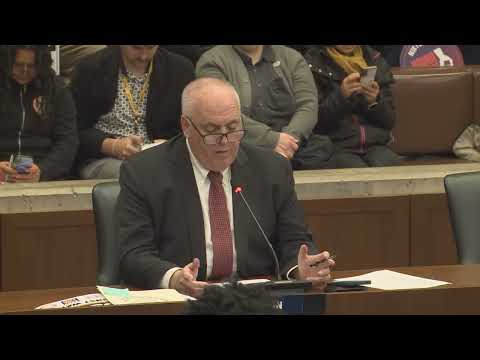
Chair Gabriela Colette Zapata opened the hearing on Docket 1432 and said the committee would take public testimony and hear panels from drivers, labor leaders, disability advocates and representatives of autonomous vehicle companies. “This hearing is being recorded,” Zapata said, noting written comments would be made part of the record.
The ordinance, sponsored by Councilor Henry Santana with co‑sponsors Councilors Aaron Murphy and Ed Flynn, would order an independent study of the effects of commercial robo‑taxis on jobs, local businesses, traffic and public safety and would establish a labor and small‑business advisory board. “This ordinance is not about opposing innovation. It’s about ensuring that innovation serves our city rather than putting our workers and their families at risk,” Councilor Henry Santana said.
Why it matters
Unions, drivers and first responders told the committee they fear job loss and safety risks if commercial autonomous vehicles are allowed to operate without guardrails. Rideshare and delivery drivers said their livelihoods connect to a broader neighborhood economy — from corner stores to car washes — and urged a cautious, public process. Councilor Aaron Murphy told the chamber the ordinance would require human safety operators: “Most importantly, it requires that no autonomous vehicle operates in Boston without a human safety operator behind the wheel.”
What witnesses said
Labor and driver testimony: A succession of drivers and union leaders described the personal and neighborhood consequences of displaced driving work. Mike Ortiz of Teamsters Local 25 said wage gains won in past strikes are fragile and that “when you replace people with machines, you just don't cut a job. You cut health care, pensions, mortgages, tuitions,” and asked councilors to back the ordinance. Union leaders and witnesses cited examples from other cities and preliminary studies they said show declining wages and market concentration where AVs have been deployed.
First responders: Paramedic Abigail O’Brien told the committee that even a 15‑ to 30‑second delay can be the difference between life and death and said snow and other weather conditions make judgment calls that “autonomous vehicles don't have common sense” to make quickly in emergencies.
Disability and access testimony: Disability organizations and blind‑traveler advocates gave mixed testimony. Carl Richardson of the Guide Dog Users of Massachusetts and Nora Nagel of the Bay State Council of the Blind said many people with vision impairments face repeated refusals from human drivers and argued that AVs can increase independent access. Greg Donnelly of the Carroll Center for the Blind said, “Autonomous vehicles don't discriminate. They don't see a guide dog, a cane, or a disability,” and urged the city to consider accessibility benefits alongside labor concerns.
Industry and safety testimony: Matthew Walsh, Waymo’s regional head of state and local public policy, said Waymo operates in multiple U.S. markets and cited company safety metrics, saying Waymo’s vehicles were involved in fewer injury‑causing collisions than human drivers in the company’s aggregated data. Walsh told the committee Waymo’s service has provided expanded mobility to people with disabilities and argued that a broad restriction would deny those benefits to Boston residents.
Other groups: Mothers Against Drunk Driving (MADD) told the committee that AVs could reduce impaired‑driving fatalities and supported responsible deployment as another tool to prevent alcohol‑related crashes.
Council questions and next steps
Councilors pressed Waymo and panelists on winter testing, the benchmarks used to remove safety operators, local job creation and whether autonomous deployment would worsen traffic congestion. Waymo said its safety data are publicly available and described market‑by‑market testing steps; union and community witnesses pressed for stronger commitments from companies to protect local jobs and for transparent safety reporting specific to Boston streets.
No vote was taken. Chair Zapata closed the hearing after extensive testimony and said the committee would continue reviewing evidence and stakeholder input before any vote.
Documents and testimony cited
Witnesses cited Waymo safety reports, local traffic data from MassDOT, a 2024 rideshare collective‑bargaining ballot outcome, and local anecdotes from first responders and drivers about weather and navigation on Boston’s narrow streets.
What the ordinance would do (as presented)
- Commission an independent public study of the impacts of commercial autonomous vehicle operations on jobs, small businesses, traffic, and public safety in Boston. - Create an advisory board including labor leaders, small business owners, city officials, transportation and public safety experts and disability advocates. - Require documentation of testing and safety benchmarks before permitting full commercial operations.
The committee posted Docket 1432 for the record and took oral and written testimony; members said more stakeholder outreach will follow before the council considers formal action.