Union Vale Middle School tells Arlington board about team building, project-based learning and expanded supports
Loading...
Summary
Union Vale Middle School administrators briefed the Arlington Central School District board on team-building, project-based learning and curriculum pilots intended to bolster student engagement and ease transitions into middle school.
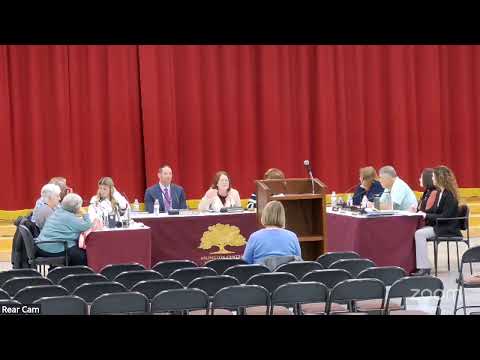
Administrators from Union Vale Middle School presented to the Arlington Central School District board about instructional and community-building work at the school, emphasizing activities intended to strengthen relationships and support learning as students transition between elementary and middle grades.
Presentation highlights included: structured team days and field trips for sixth through eighth graders to foster peer and teacher relationships; a CanFEL assembly to set positive expectations; project-based learning in science and technology classrooms (students iteratively building magnet-powered machines and conducting liquid-density experiments); and grade-level team activities that provided hands-on, collaborative work. Administrators noted that sixth graders arrive from four different elementary buildings and that early relationship-building helps students transition more smoothly.
The school described a “buddy” approach in special areas to integrate Journey students and said Journey programming has been expanded to keep more students in-district, enabling two Journey teachers to collaborate and create continuity as students age into middle school. Teachers and leaders also noted piloting a new literature-based ELA curriculum for sixth grade and wider use of IXL in math to support instruction and interventions; staff said the new materials were chosen to create alignment across teachers and to address areas where students had plateaued.
Board members who visited the school in a recent walkthrough reported seeing student engagement in classrooms and praised instructional practices that encouraged tinkering, iteration, and student problem-solving. One board member noted the value of front-loading relationship building because it supports later academic interventions when students need additional help.
No formal decisions or votes resulted from the presentation; staff were invited to continue sharing outcomes and implementation details as programs develop.